Phoenix Water Damage Restoration in Murrieta: A Homeowner’s Guide
After a residential fire is suppressed, the structure typically contains 200 to 400 gallons of water introduced by hose lines and suppression systems – water now sitting in smoke-damaged wall cavities, soaking insulation, and wicking into flooring systems already structurally weakened. Phoenix water damage restoration in Murrieta addresses this combined event: thermal damage from the fire itself plus water saturation from the firefight. If you’re facing this situation right now and want to skip straight to a fix, call (844) 643-8708 for a free assessment.
Most Murrieta homeowners understandably think of fire and water as separate emergencies. They’re not. The same event that chars framing also floods the cavity behind it. A restoration sequence that treats one without accounting for the other leaves both half-finished. This guide explains what actually happens in a post-fire structure, why the drying science changes, and what to verify before anyone starts pulling equipment off a truck.
What Phoenix Water Damage Restoration Actually Means in Murrieta
The term “phoenix” here refers to two things residents should understand. Phoenix is both a professional-grade restoration equipment brand – specifically their axial air movers and desiccant dehumidifiers used in commercial drying – and the concept of a structure rising from fire and water damage. In Murrieta’s hot, dry summers and cool wet winters, the drying environment changes month to month, which affects how restoration technicians place equipment and set drying targets.
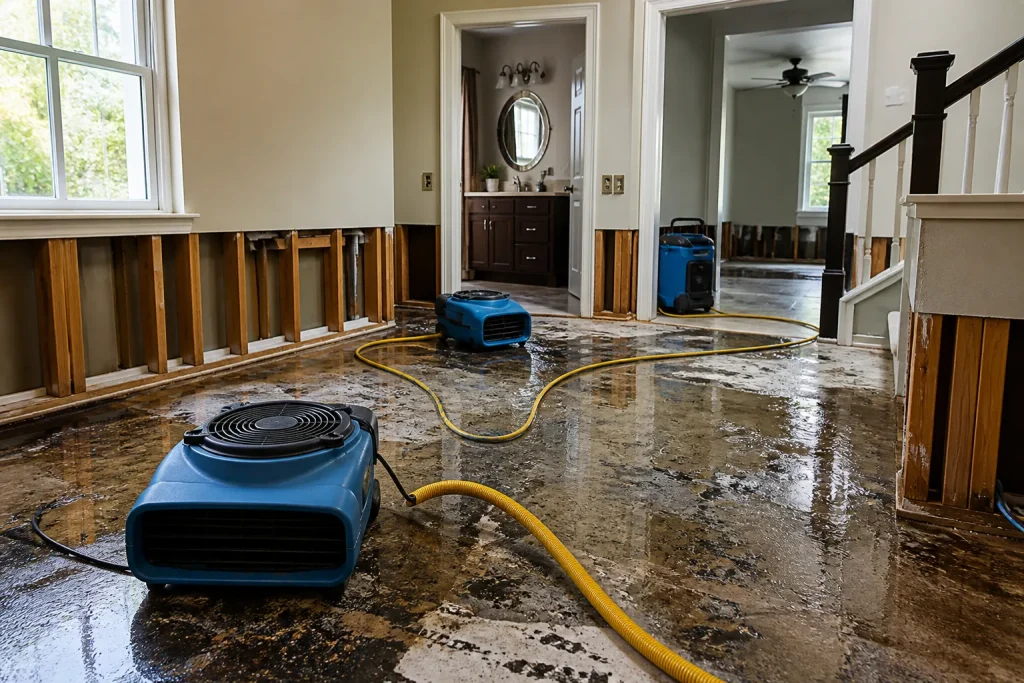
Here’s what matters for homeowners: after a fire in Murrieta, the water from suppression doesn’t just sit on surfaces. It migrates. Within hours it wicks up drywall, travels through wall cavities, settles under cabinetry, and pools in subfloor spaces. The thermal damage from the fire has already compromised materials, which means water moves through them differently than through intact building assemblies. A standard water damage response – extract, place air movers, dehumidify, monitor – is not sufficient when smoke, soot, and char are present in the same environment. The sequence has to change, and the technician performing it needs credentials specific to both damage types.
Why the Standard Drying Sequence Fails After a Fire
In a standalone water loss – a supply line break, a water heater failure, an overflowing appliance – IICRC S500 standard drying protocols apply cleanly. Technicians extract standing water, establish a drying chamber, place equipment, and monitor moisture levels until materials reach dry standard. That sequence works because the structure is intact and the air is contaminated only by moisture, not by combustion byproducts.
In a post-fire Murrieta home, that sequence falls apart for two reasons:
- Smoke-saturated materials off-gas into drying airflow. When air movers push air across charred drywall and soot-covered framing, they aerosolize particles and volatile compounds that were otherwise settled. Without containment established first, the drying process actively spreads smoke contamination into rooms the fire never touched. This is why certified technicians establish containment zones before placing a single air mover.
- Thermally damaged materials change moisture behavior. Fire-damaged drywall becomes more porous. Charred framing can develop surface checking and micro-fractures. These materials absorb and release moisture at different rates than intact building components, which changes where technicians place equipment, how long drying runs persist, and what moisture content readings are considered “dry.” The IICRC Fire and Smoke Restoration Technician (FSRT) certification covers this intersection specifically. Without it, an otherwise qualified water technician may be applying water-damage assumptions to fire-damaged materials.
We ran a job over in the Copper Canyon area a while back where a kitchen fire had been knocked down by a single sprinkler head. The homeowners had a water mitigation company already on site by the time we arrived. No containment. Air movers running at full speed, pushing soot-laden air through a house that had been sealed up for two days. The fire was contained to the kitchen. The smoke damage was already making its way into the master closet by the time someone thought to question it. That’s not a criticism of the other company as much as it is a demonstration of what happens when water drying protocol gets applied to a fire event.
Equipment and Credentials That Matter for Combined Damage in Murrieta
When you’re vetting a restoration company in Murrieta for post-fire water damage, there are two things to verify that most homeowners never ask about: the equipment on the truck and the certification behind the technician.
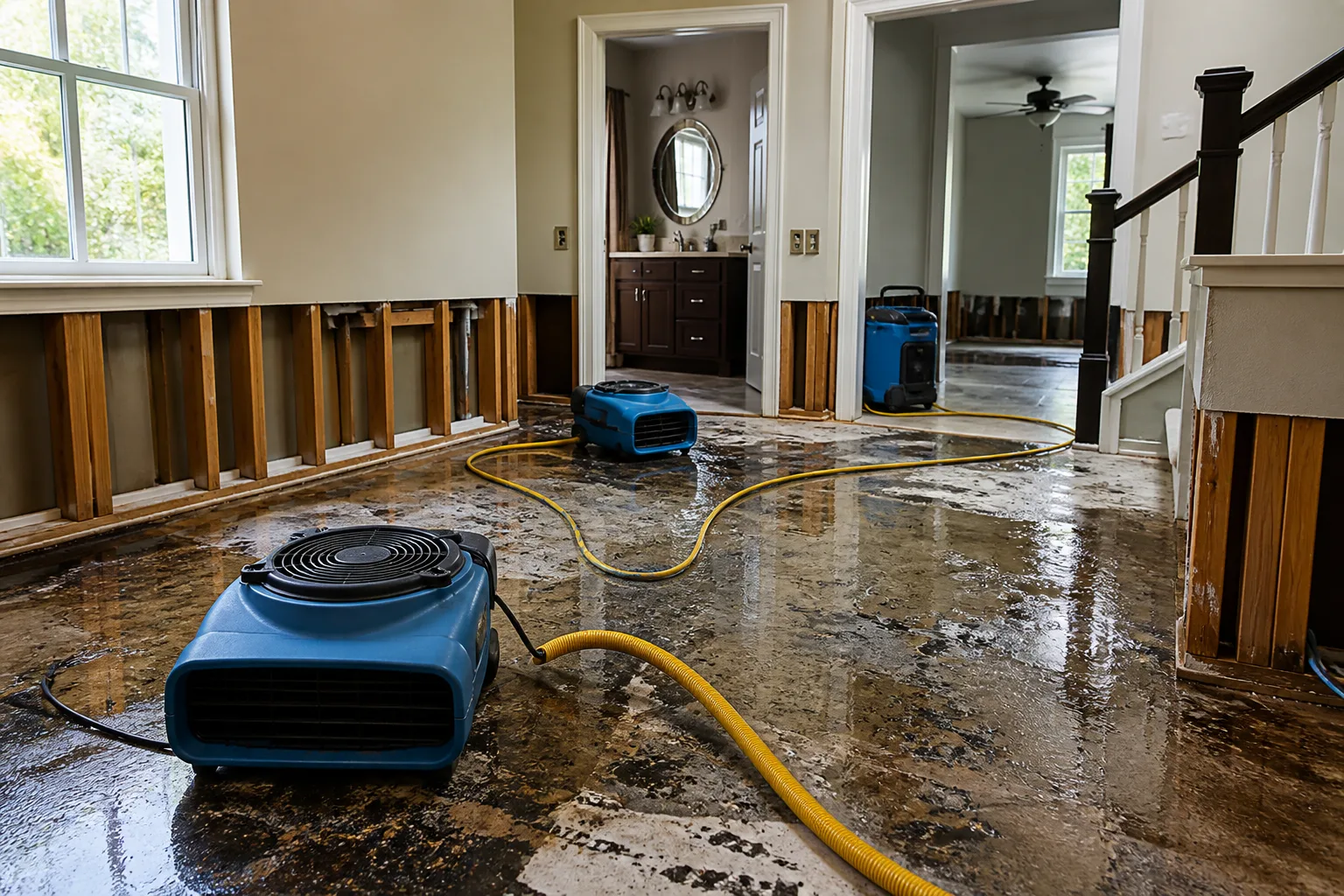
On equipment: Phoenix, Dri-Eaz, and XPOWER air movers and dehumidifiers are the brands used in commercial-scale restoration, not consumer-grade units from a hardware store. The difference matters because post-fire structures require more aggressive drying than typical water losses. The evaporation load is higher. The material porosity is variable. The acceptable drying window is compressed because damaged materials are deteriorating while wet. Professional-grade equipment moves more cubic feet per minute and pulls more gallons per day out of the air. A homeowner cannot replicate that with rental equipment.
On credentials: IICRC is the recognized training body for the restoration industry. For combined fire and water damage, relevant certifications include WRT (Water Restoration Technician) for water extraction and drying, and FSRT (Fire and Smoke Restoration Technician) for the fire-specific sequence. A company that holds both understands the interaction between suppression water and combustion damage. A company that holds only one may be excellent at what they do, but they’re not the right fit for this specific loss type. Whitehall Water Damage maintains IICRC credentialing alongside memberships in the Restoration Industry Association (RIA) and IFA, and works to published IICRC S500 and S700 standards for water and fire respectively.
Why One Team Should Handle Both Damage Types
Splitting fire and water restoration between two contractors is the single most common sequencing mistake we see in Murrieta. Here’s why it creates problems:
Contractor A handles smoke and soot. Contractor B handles water extraction and drying. Contractor A wants containment up first. Contractor B wants extraction done first. Neither coordinates with the other. The homeowner is left managing two schedules, two scopes, two invoices, and two adjusters. More damaging: when water sits behind walls while fire remediation waits, mold growth conditions develop in the same cavities where soot is already present. That’s a cascading event. The water damage becomes a mold remediation job, and that’s a different scope, a different standard (IICRC S520), and often a different coverage conversation with insurance.
One credentialed team handling both damage types in a single scope avoids the handoff entirely. Extraction, containment, smoke remediation, structural drying, and deodorization happen in the correct sequence because the same technicians are responsible for all of it. Whitehall Water Damage covers the full damage triangle – water damage restoration in Murrieta, mold remediation, and fire damage restoration – so a combined event doesn’t require subcontractor coordination or multiple points of contact.
What Murrieta Homeowners Need to Document for Insurance
When fire and water damage are present simultaneously, the insurance claim gets more complicated. Here’s the sequence to protect yourself in Murrieta:
- Photograph everything before anything moves. This includes standing water locations, visible char, ceiling collapse areas, and the condition of smoke-damaged drywall. The pre-mitigation condition is your baseline. If water extraction starts before documentation is complete, adjusters have less to work with.
- Don’t discard water-damaged or fire-damaged materials until the adjuster has seen them. If structural materials must come out for safety reasons, photograph them in place and keep them on site in a covered pile. Discarding them before the adjuster’s visit can create coverage disputes for claims that are already complex.
- Get the scope in writing and sequenced correctly. The written scope should show containment before drying, extraction before demolition where applicable, and deodorization after structural drying. If the sequence is wrong on the claim, the restoration work itself may not meet IICRC standards, which creates a secondary dispute.
- Note the source of the water. Fire suppression water is categorically different from a clean supply line break. Document whether the water came from sprinklers, hose lines, or pipe failures caused by thermal damage. This matters for coverage classification.
A restoration company that provides photo-documented assessments and clear written scopes makes this process measurably simpler for the homeowner and the adjuster. It’s also a strong signal that the company is operating to a standard rather than improvising.
Key Takeaways
- After a fire is suppressed, 200 to 400 gallons of water may be present in the structure, requiring a modified restoration sequence.
- Drying airflow must never be applied to smoke-saturated materials without containment established first.
- Thermally damaged drywall and framing behave differently under drying science than intact materials.
- Verify both WRT and FSRT IICRC certifications when hiring for combined fire and water damage in Murrieta.
- Documentation and sequencing on insurance claims for combined damage events directly affect coverage outcomes.
The Bottom Line
Post-fire water damage in Murrieta is not a standard water loss with some smoke odor attached. It’s a specific event type requiring a modified drying sequence, fire-specific containment protocols, and coordination between water extraction and smoke remediation in a single sequenced scope. The technicians performing this work should hold fire and smoke restoration credentials, not just water credentials. The equipment should be commercial grade – Phoenix, Dri-Eaz, and similar professional brands – because the evaporation load in a post-fire structure exceeds what consumer equipment can handle.
If you’re in Murrieta and dealing with fire and water damage together, we’d rather walk you through the correct sequence than watch someone apply the wrong protocol. Whitehall Water Damage offers free assessments and will tell you straight whether the work is urgent or can wait a day. Call (844) 643-8708.
Frequently Asked Questions
In most cases, yes. Water from fire suppression – hose lines, sprinkler activation, or fire department operations – is typically covered under the same claim as the fire damage itself. The key is documentation: photograph standing water before extraction, note the water source, and keep damaged materials on site until your adjuster has reviewed them. The sequence also matters. If water damage is not properly mitigated and leads to mold, the mold coverage conversation changes. Call your insurer first, then get a written scope from a certified restorer.
Within the first 24 to 48 hours. Water in a post-fire Murrieta structure is not clean water – it has percolated through smoke-deposited residues, char, and compromised building materials. The longer it sits, the faster it wicks into porous materials and the more it degrades already-damaged drywall and framing. Mold conditions can develop within 48 to 72 hours in Southern California’s warmer months. Extraction should be the first physical step, but containment must be planned concurrently so drying doesn’t spread contaminants.
We don’t recommend it. The drying science in a combined fire and water event is different from a clean water leak. The risks that make professional equipment and training necessary include contaminant aerosolization from running air movers on soot-covered materials, incorrect moisture readings on charred or heat-compromised materials, and the longer drying windows that require continuous monitoring. Commercial-grade equipment like Phoenix and Dri-Eaz units moves significantly more air and removes more moisture than rental units. Hiring an IICRC-certified team in Murrieta with both WRT and FSRT certifications is the reliable path.
WRT (Water Restoration Technician) certifies a technician in water extraction, drying science, and structural drying according to IICRC S500 standards. FSRT (Fire and Smoke Restoration Technician) certifies a technician in fire damage assessment, smoke and soot remediation, and the correct sequence for fire-related restoration including odor control and deodorization. A combined fire and water event requires both skill sets, which is why homeowners in Murrieta should verify that the company they hire holds both certifications and runs the job with technicians who carry them.
Written by the team at Whitehall Water Damage, serving Murrieta since 2015.
Need Damage Restoration Help?
Call Whitehall Water Damage — licensed & insured, here with fast after-hours help in Murrieta.
(844) 643-8708