
 Water damage drying
 Fire & smoke cleanup
 Mold remediation
 Storm response
 Sewage cleanup
 Reconstruction
Free visual inspection and a written scope of work before any mitigation begins - photos, moisture readings, and drying logs go in your claim file
The scope we write is the scope we bill. Anything new gets shown to you, in writing, before we touch it.
Get your free estimateFast, Reliable Water Damage Restoration Across Perris
Water damage restoration in Perris usually means one of two scenarios: a winter storm or monsoon burst that floods a room within hours, or an irrigation-line failure that has been quietly soaking wall cavities and slab edges for weeks while the surface stays dry to the touch. We respond to both, day or night. Our IICRC-certified technicians drive into Perris from Murrieta with commercial-grade drying equipment already staged, so the first truck that arrives is the one that starts extraction and structural drying. If water is actively moving through your house right now, call (844) 643-8708.
We know Perris’s tract layouts, its slab-on-grade foundations, its upstairs laundry rooms in the newer builds east of the 215, and its older ranch homes near the downtown core. That matters because drying a 1990s Perris rancher is not the same job as drying a 2021 two-story off Nuevo Road. The construction, the plumbing type, the soil around the slab, even the way the afternoon sun hits the west wall all change how moisture moves and how fast we can pull it out. Local knowledge like that is the difference between a dry structure and a surface that just looks dry.
This page covers what Perris homeowners and property managers actually ask us: what restoration costs here, why hidden irrigation leaks are so common in this climate, how we dry detached workshops and acreage properties, and what the process looks like from the first call to the final moisture reading.
Why Whitehall Water Damage Is Perris’s Preferred Water Damage Restoration Company
Most restoration companies will tell you they show up fast. Fewer can tell you which Perris neighborhoods keep us busiest for irrigation-fed wall-cavity leaks versus monsoon window-flashing failures. We can, because Perris is one of the cities we serve most frequently from our Murrieta base, and the pattern is consistent: the older subdivisions around the downtown core and the acreage lots along Nuevo Road and the I-215 corridor generate slower, hidden water damage from failing sprinkler supply lines and drip systems. The newer tracts on the eastern and southern edges generate more burst PEX lines, washing-machine supply failures, and storm-driven roof leaks.
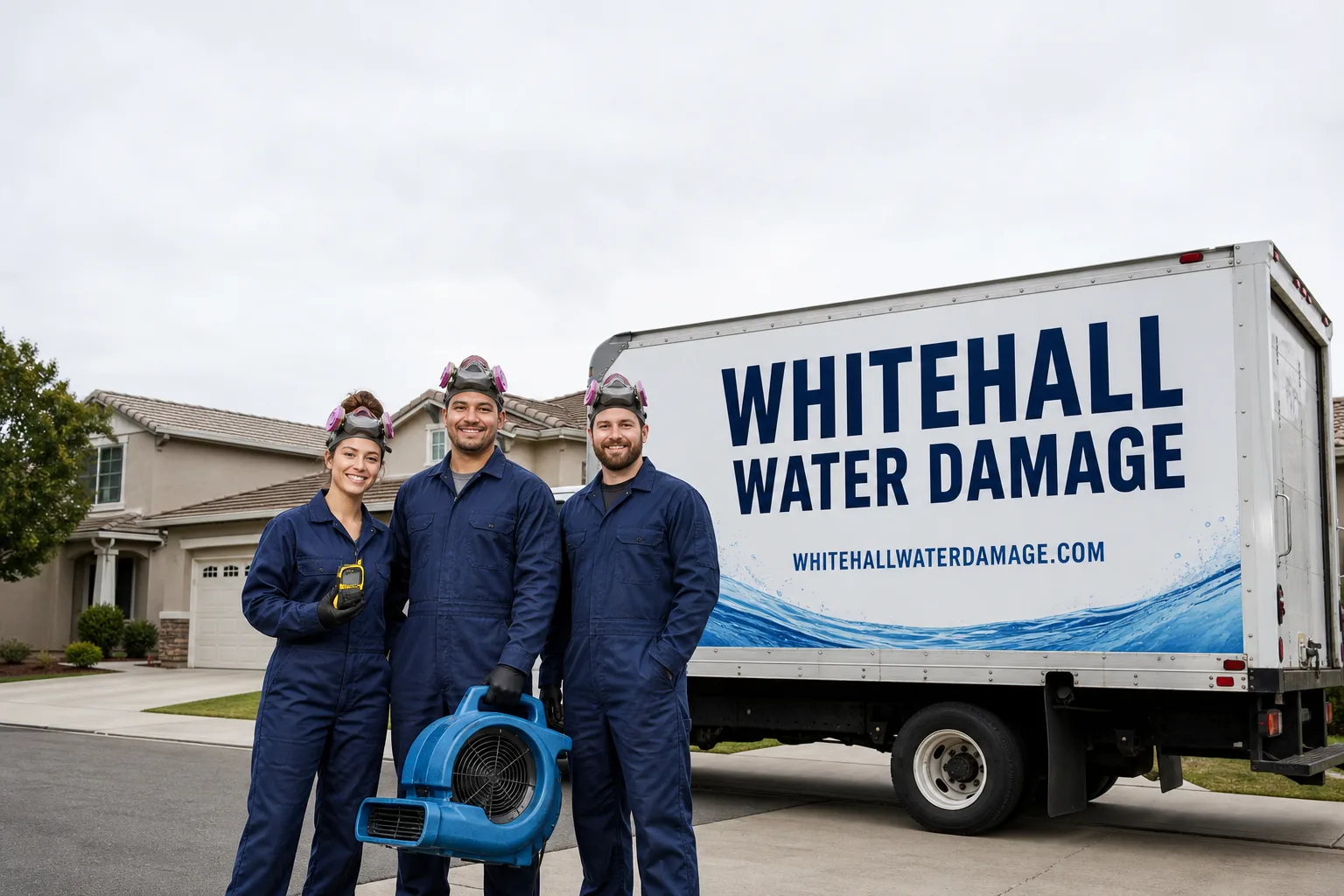
Our reputation in Perris comes from the fact that our Water Damage Restoration team operates under one credentialed roof. Nolan Beckett leads a crew of IICRC-certified technicians who work to published IICRC S500 standards on every water loss. We also carry RIA and IFA memberships, which means our process is answerable to more than just our own word. When we dry a Perris home, we document every moisture reading, every equipment placement, and every drying-day log against the professional norms those associations set.
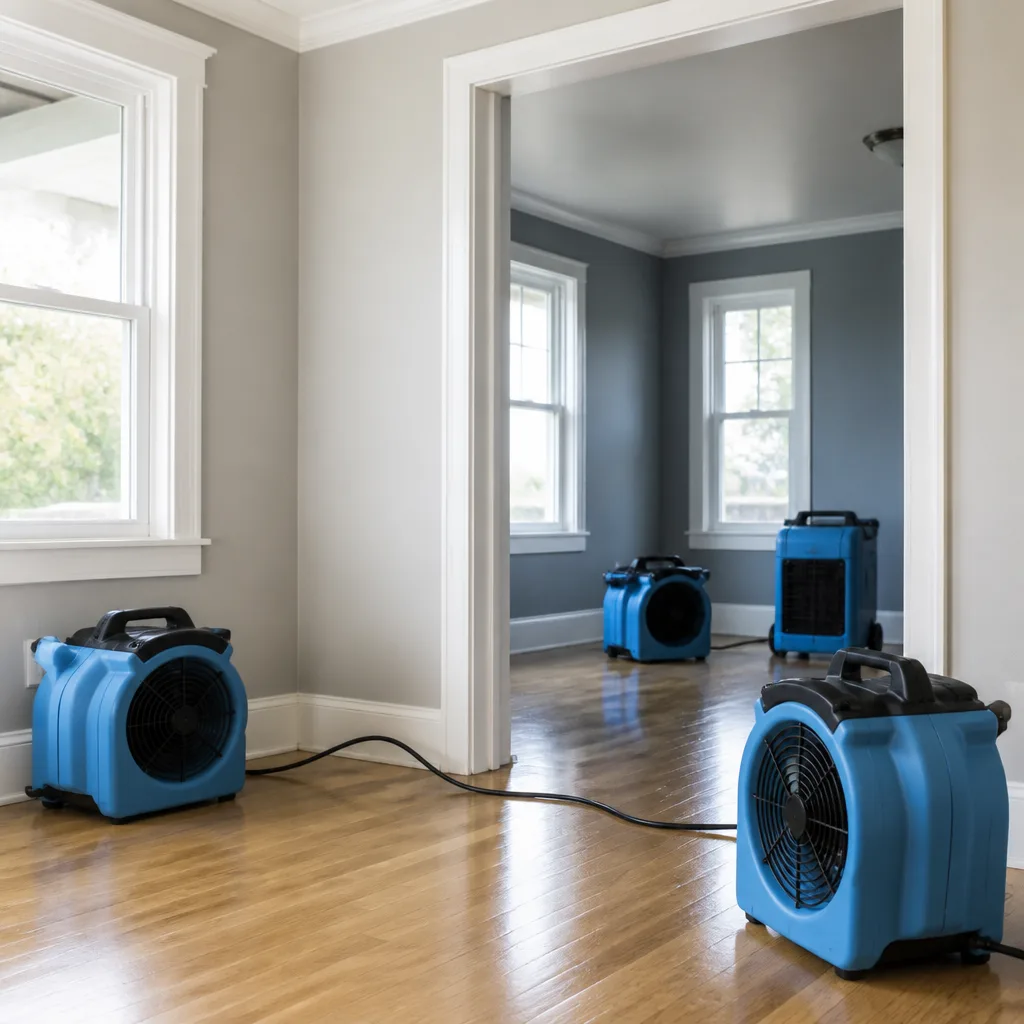
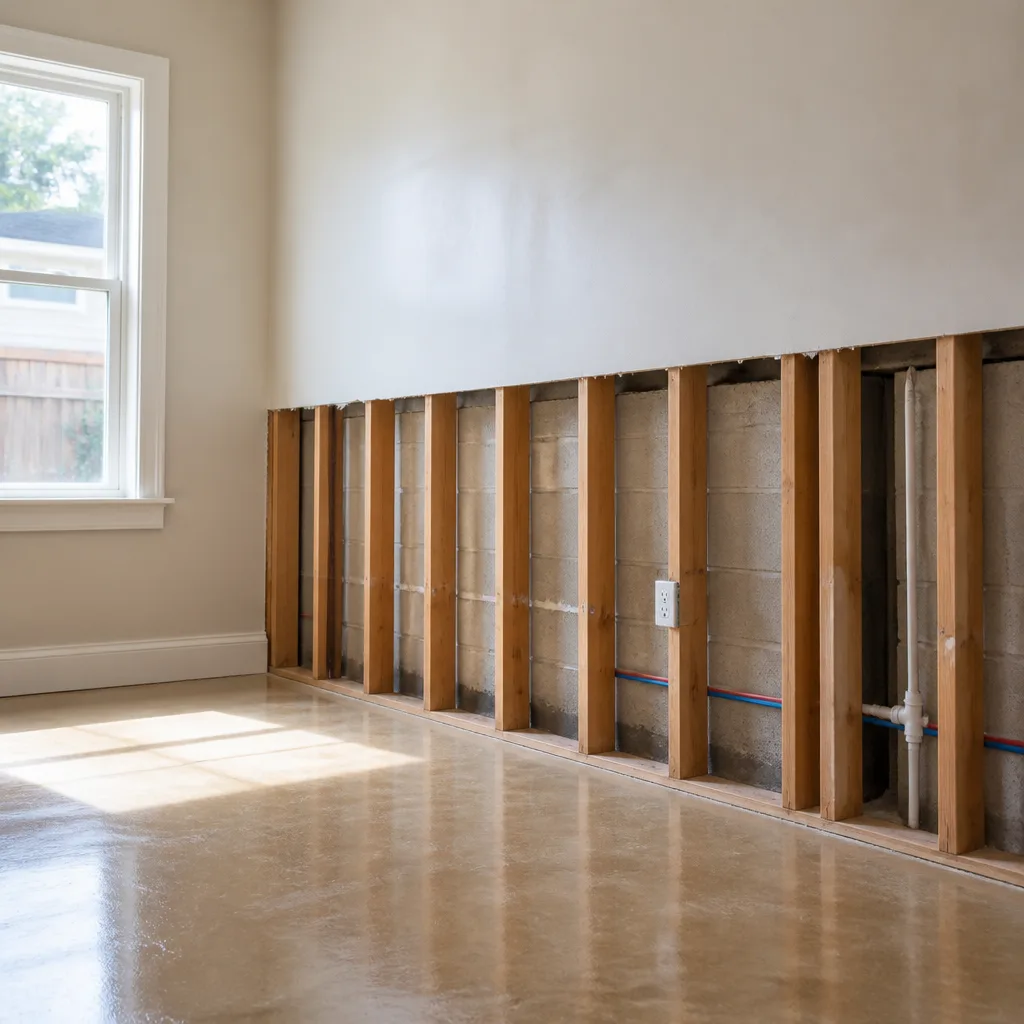
Perris homeowners call us because we bring the equipment that actually fits the job. Dri-Eaz and Phoenix air movers and dehumidifiers. XPOWER air movers for tighter spaces. B-Air ducting and filtration where needed. Injectidry panels for in-place drying of wall cavities and under slab edges without tearing out drywall unnecessarily. That last system matters a lot here, given how many Perris water losses hide behind stucco and tile.
Restoration work we handle
Flooded Basement in Perris
A flooded basement in Perris isn’t the same animal as a flooded basement in the Midwest. Most Perris homes sit on slab-on-grade foundations, which means true basements are rare. But what smaller elevation changes do exist, and what detached workshops, dug-out garages, and sunken laundry rooms create, is still a contained low point where water collect and sits. When a hose bib fails against a lawn-side wall, or a water heater in a converted garage cracks its tank, that water has nowhere to go except down and sideways. We see basement-style flooding in Perris most often in older properties near the downtown core, where pre-1980 construction sometimes includes partial below-grade foundations, and in homes that have converted their garage into a living space with the floor still sloped toward the old roll-up door.
Our flooded basement response starts with extraction. We bring truck-mounted and portable extraction wands, pull the standing water, then evaluate what the water touched. If the source was clean, we’re looking at Category 1 and a straightforward dry-out. If it’s washing-machine discharge or a failed water heater with sediment, it’s Category 2, and we set containment and apply antimicrobial treatment before drying. A flooded basement or below-grade space in Perris typically runs $1,500 to $4,800 depending on square footage, how long the water sat, and whether materials like drywall, baseboards, or carpet pad need removal.
Water Sitting Against the Slab
Any below-grade or slab-edge flood in Perris needs a moisture check beyond the visible pond, because the soil around the foundation here is compacted clay that holds water longer than most people expect. We run a moisture meter across the slab and the lower wall cavities, not just where the water was visible.
Converted Garage Floods
Converted garages flood differently than living spaces. The original garage slab slopes toward the driveway, so water runs against the old door threshold, the side walls, and any framing that was added during the conversion. We dry those spaces with the same standard as a living area, because that’s what they’ve become.
Water Extraction in Perris
Water extraction is the first physical step on any Perris water loss, and how it’s done sets the timeline for everything after. When a homeowner off the I-215 corridor calls because a supply line burst in an upstairs laundry room and water is dripping through the ceiling below, the first thing we do is stop the source, then extract the standing water from every layer that’s holding it: the carpet and pad, the subfloor if it’s accessible, the tile grout lines, the wall base, the ceiling cavity. The faster that water comes out, the less total drying time the structure needs. In Perris, where summer temperatures routinely exceed 100°F and humidity sits in the single digits, the air will fool you into thinking things are drying on their own, but structural materials don’t dry by evaporation alone, they dry by controlled dehumidification and air movement.
Standing-water extraction for a single flooded room in Perris typically runs $500 to $1,200. Full-home extraction after a slab leak or multiple-room event runs $1,200 to $3,500. Those numbers cover the extraction equipment and labor only; structural drying is a separate scope we quote in writing before work starts.
Extraction Before Moisture Mapping
We don’t set drying equipment until the bulk water is gone. Extraction first, then a full moisture map across floors, walls and ceilings. That sequence stops us from hiding wet zones behind dry ones.
Extraction on Slab Foundations
Perris’s slab-on-grade construction means water doesn’t drop into a crawlspace and disappear. It travels laterally along the slab, under baseboards and into wall cavities. Our extraction team probes those runs so the water doesn’t sit where you can’t see it.
Trusted Brands We Service in Perris
We don’t care what brand of water heater, washing machine, dishwasher, or irrigation valve is installed in your Perris home, but we do care how the failure behaves. Perris homes run the usual Inland Empire mix: Bradford White, Rheem, and AO Smith water heaters in the older tracts, tankless units from Rinnai and Navien in some of the newer builds, Whirlpool and LG laundry equipment, and Rain Bird or Hunter irrigation controllers on acreage lots. The pattern we’ve learned from servicing Perris specifically is that irrigation supply lines and hose bibs on the lawn-side exterior walls fail more often than anything else, and they fail slowly. That’s a different restoration job than a burst washing-machine hose, and we stock the drying and extraction equipment to handle both. If the failure is behind a wall and you want it dried in place without tearing out the drywall, our Injectidry system is built for exactly that.
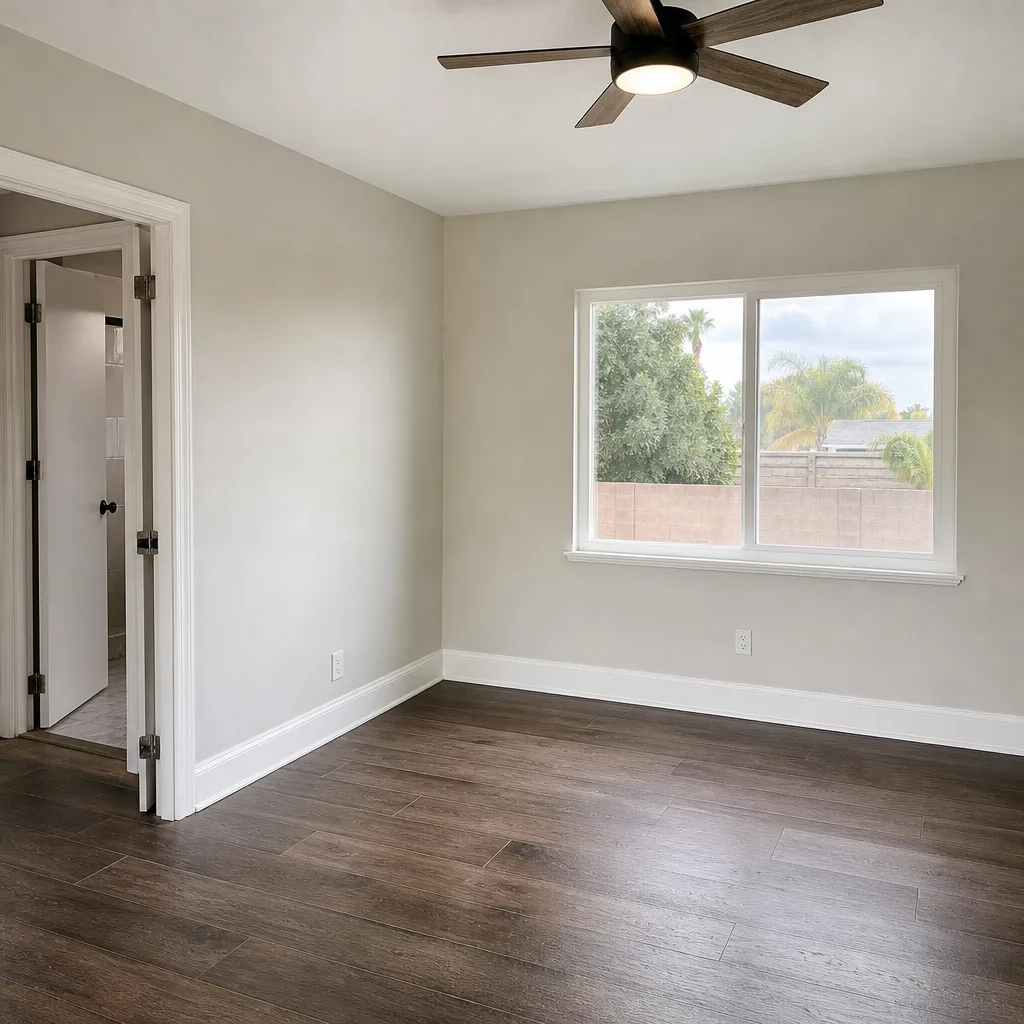
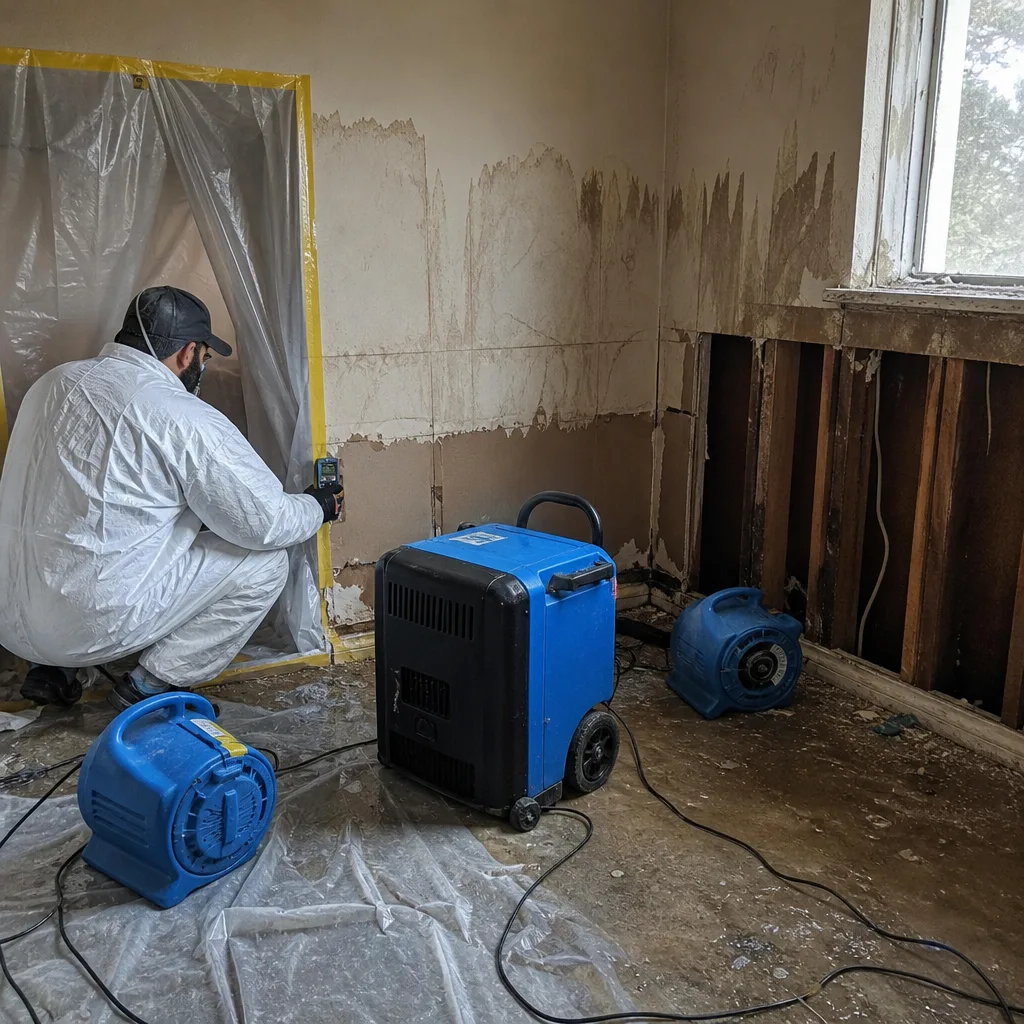
See the difference
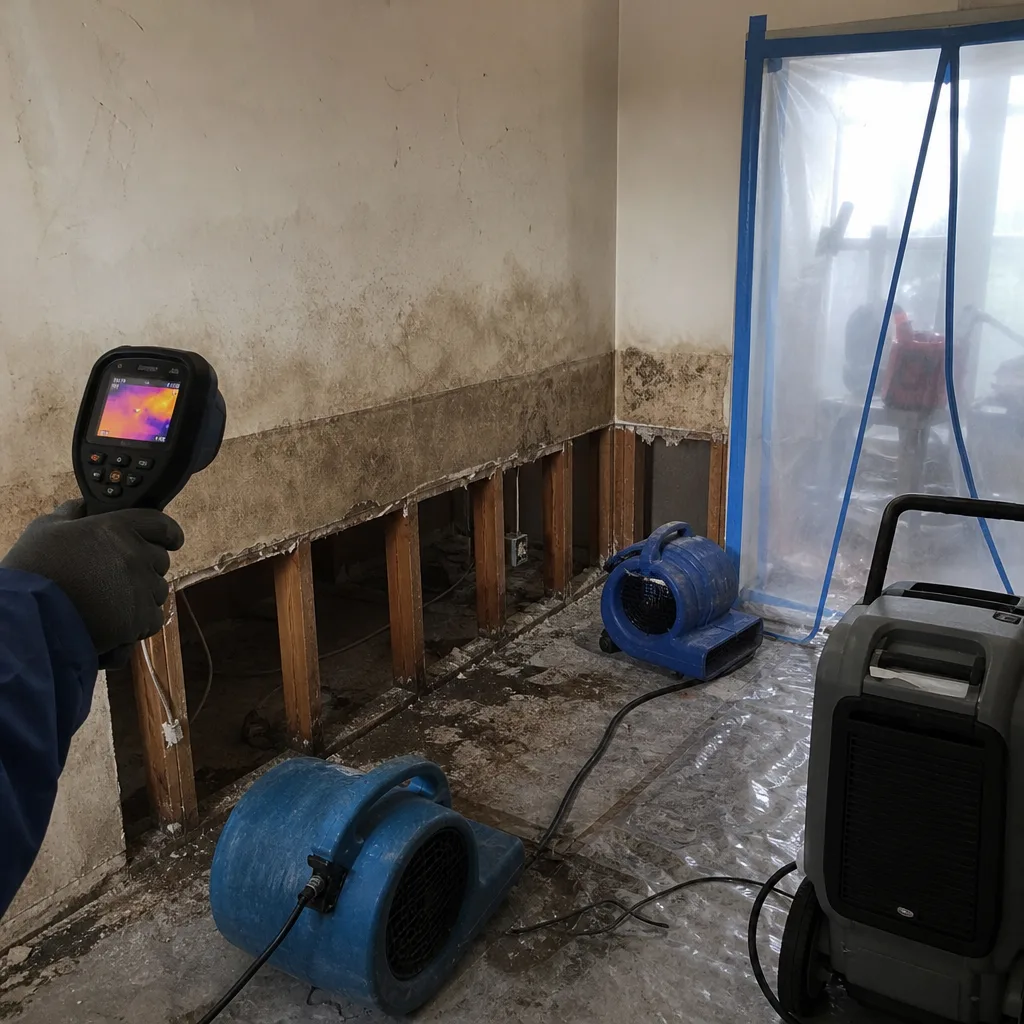 Before
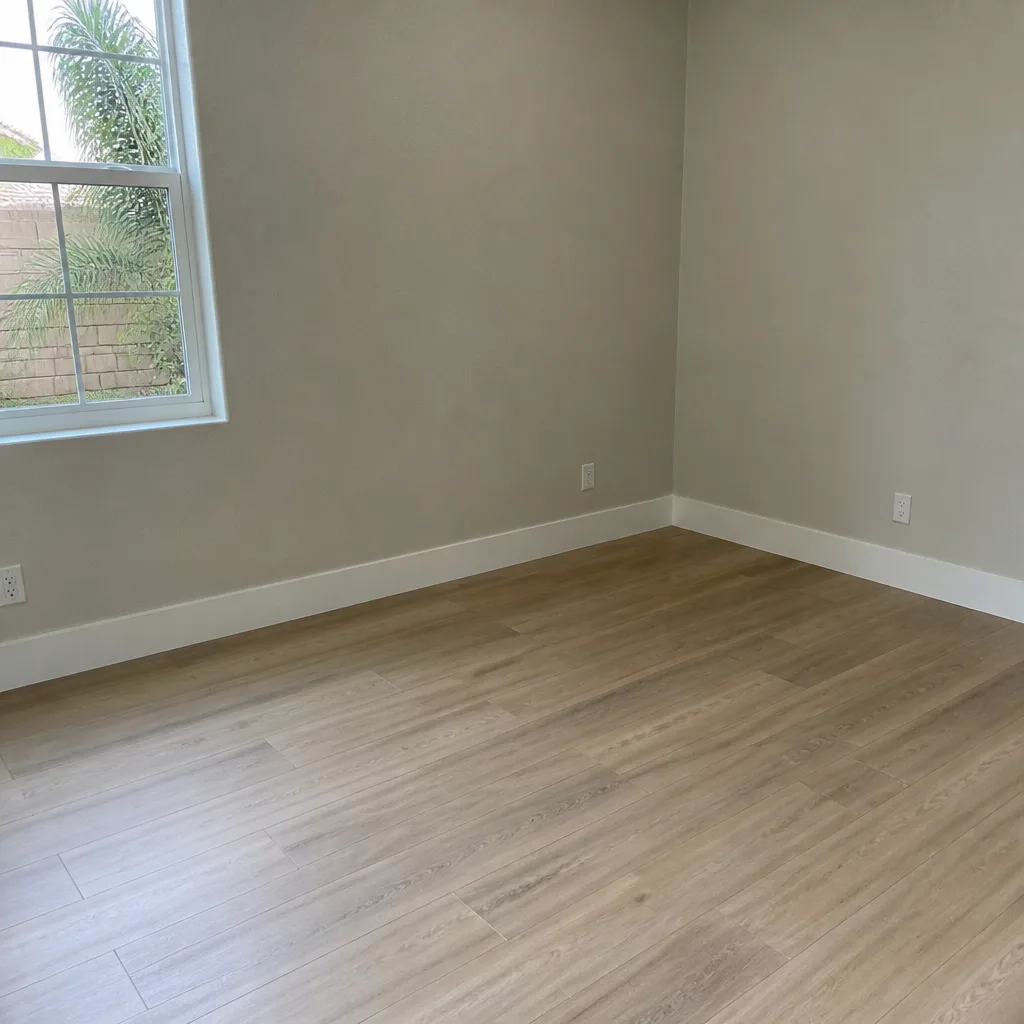 After
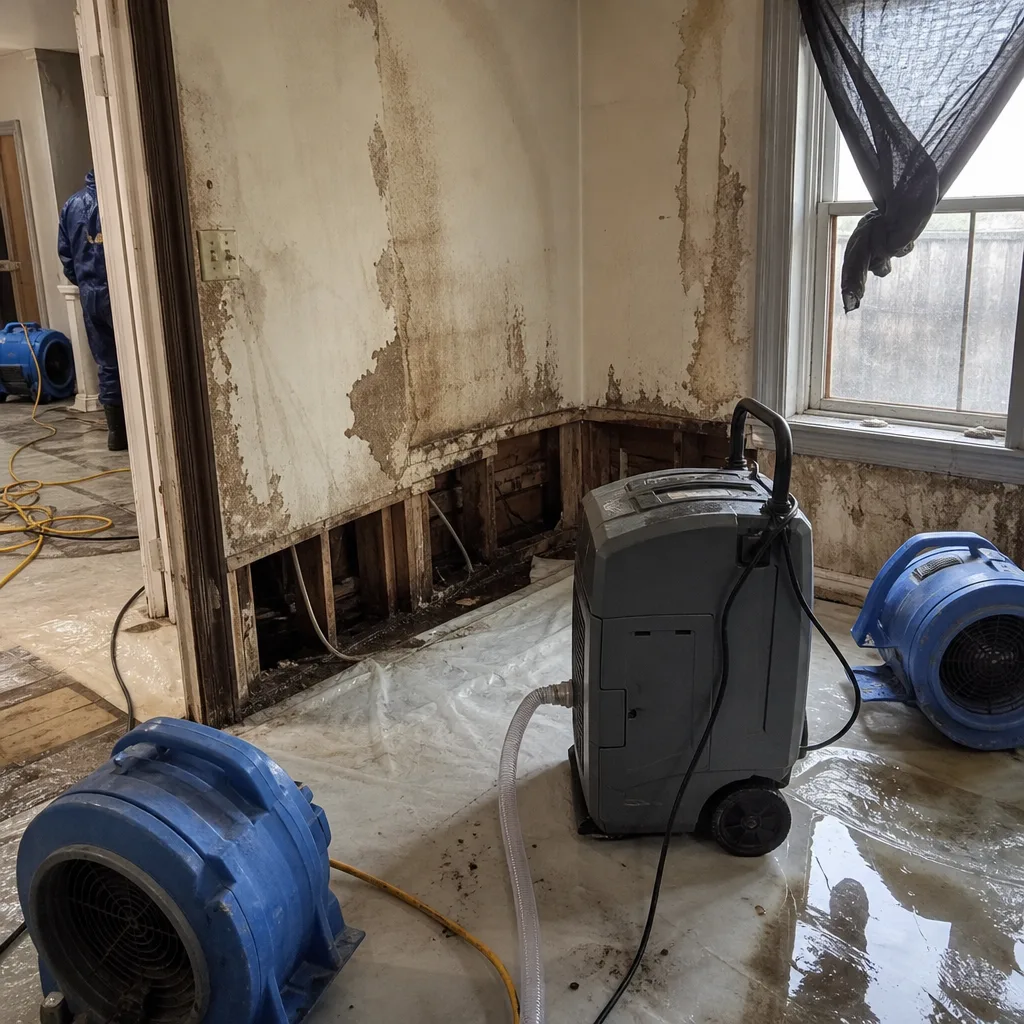 Before
 After
 Before
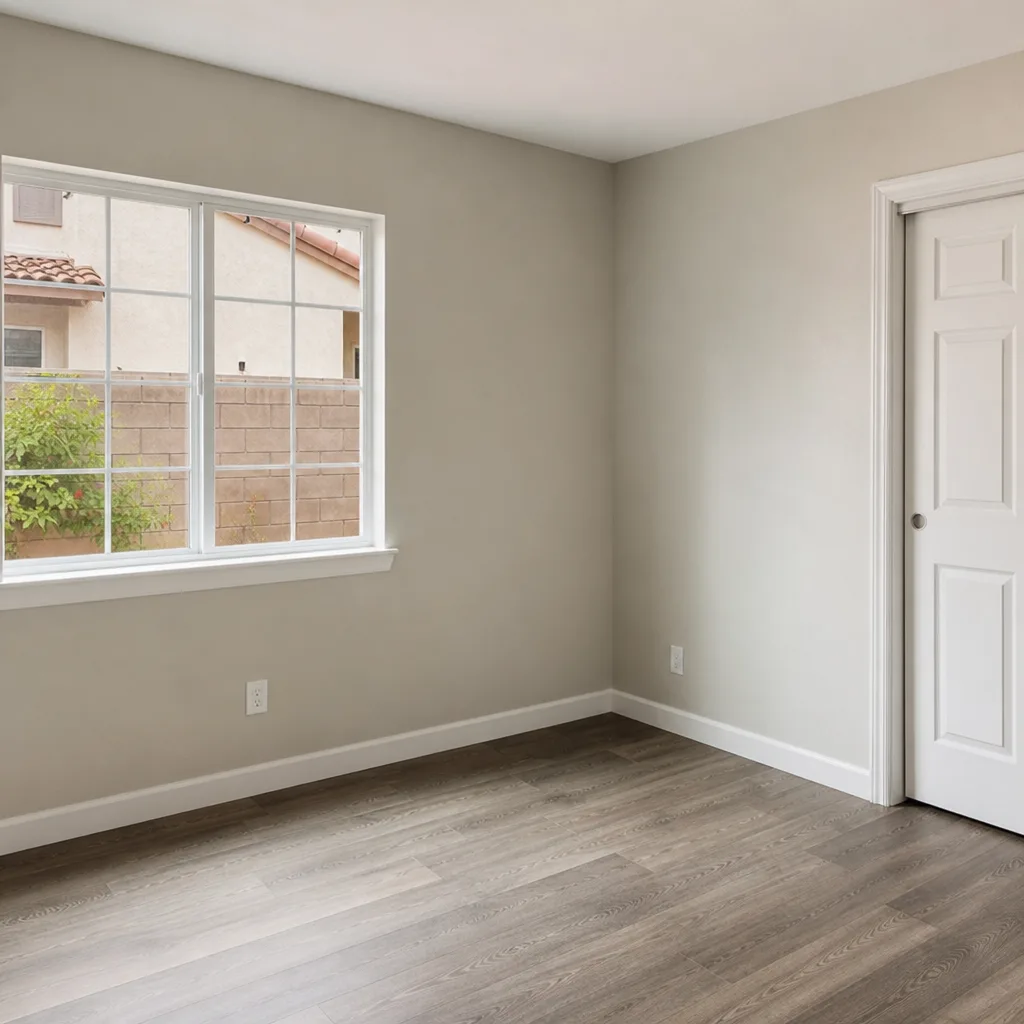 After
Common Water Damage Restoration Problems We See in Perris Homes
- Hidden irrigation-line leaks against exterior walls. A drip line or sprinkler supply pipe fails along a stucco wall, and the water moves into the slab edge or up the wall cavity while the Perris sun bakes the surface dry. Homeowners don’t see it for weeks, sometimes until the baseboard warps or the paint blisters. We find these with moisture mapping, not visual inspection.
- Builder-grade PEX failures in newer tracts. The subdivisions built east and south of central Perris in the last 15 years run flexible PEX plumbing, and when a fitting fails, the water moves fast and hides behind the drywall. Category 2 water from a failed supply line needs containment and antimicrobial treatment, not just air movement.
- Wind-driven rain through roof penetrations and window flashing. Perris gets little rain most of the year, but the storms that do arrive come with strong wind. That wind pushes water through roof pipe boots, HVAC penetrations, and window flashing on the windward side of the house, and it runs down inside wall cavities before it ever stains the ceiling.
- Detached workshop and outbuilding water losses. A lot of Perris acreage properties have a detached shop or garage with its own water line, and when that line fails against the building’s exterior wall, the water pools inside the slab and stays there. Those outbuildings need the same extraction and drying effort as the house, and skipping them to save a trip just means a second mobilization.
Pricing for Water Damage Restoration in Perris, CA
Here’s what we quote for Perris work, in plain numbers. Water extraction for one flooded room runs $500 to $1,200. Structural drying for a single room runs $900 to $2,200, and a full-home loss with multiple affected rooms runs $2,500 to $7,500. A flooded basement or below-grade space with contaminated water starts near $1,500 and can reach $4,800 when drywall and flooring removal are included. A hidden irrigation leak that requires cavity drying with Injectidry panels and sub-slab probing runs $1,800 to $3,400. These ranges reflect what we’ve actually billed on Perris jobs over the last several years, and they include equipment, labor, and daily monitoring while drying is active. Call (844) 643-8708 for an exact written scope on your specific loss, not a verbal guess.
We Also Serve Cities Near Perris
Our trucks run to Good Hope, Mead Valley, Romoland, and Sun City on the same dispatch schedule as the rest of Perris, so a property manager handling multiple units across these communities isn’t waiting on a different crew for each address. If your rental or commercial property sits just outside the Perris city line, the same IICRC-certified technicians and the same Water Damage Restoration in Perris protocols still apply.
Serving Perris, CA — Our Local Coverage Area
We’re based in the Perris area and know this community well. Use the map below to see our service coverage — if you’re nearby, we can almost certainly help.
FAQs About Water Damage Restoration in Perris
Perris sits in a semi-arid valley at about 1,400 feet, and in the summer the air is so dry and the sun so intense that stucco surfaces and slab edges evaporate surface moisture within a day. But evaporation only affects the outside face. The water inside a wall cavity, under a slab edge, or behind tile has nowhere to get airflow, so it stays wet for weeks while the surface reads bone-dry to the touch. The only way to know is a moisture meter reading at the right points: lawn-side exterior walls, hose bibs, and anywhere irrigation lines run near the foundation. Skipping that step is how Perris homes end up with hidden water damage that turns into structural rot or mold before anyone notices. Call us with any question at (844) 643-8708, and if you think you have this problem, ask us to run a moisture map.
Category 1 is clean water, like a supply line or sink overflow. Category 2 is significantly contaminated water that can cause illness, like washing-machine discharge, dishwasher overflow, or water that has sat for more than 48 hours and started supporting microbial growth. Category 3 is grossly contaminated water from sewage, outside flooding, or a backed-up line. The category determines whether we need containment, antimicrobial treatment, and disposal of affected materials, and per IICRC S500 standards, we don’t treat a Category 2 loss like a Category 1. One of the recurring problems we see in Perris is an irrigation line that has been leaking for weeks, and by the time it’s found, the water has sat long enough to move from Category 1 to Category 2.
The earlier you start extraction and drying, the less material you lose. Within 24 to 48 hours, most drywall and carpet pad can be saved if the drying conditions are right. After 72 hours, microbial growth becomes likely, and the remediation scope expands significantly. Because Perris storms tend to be short but intense, the damage window compresses: a wind-driven rain event can soak a wall cavity in an hour, and the hot dry air behind the storm doesn’t dry the inside of that cavity at all. If you see water or suspect a leak after a storm, call (844) 643-8708 and get our team into Perris as soon as possible.
Yes. A detached shop or workshop on a Perris acreage lot has a larger cubic volume, longer throw distances for air movement, and usually a slab that holds water along the edges. We size our equipment for the total affected square footage and building configuration, not just the wet spot. That often means more air movers from Dri-Eaz or Phoenix, a dehumidification setup sized for the full enclosed volume, and Injectidry panels where water has wicked into wall cavities around the building’s water service entry. The goal is to dry it in one mobilization, because the drive back out to a Perris acreage property for a second setup costs you time and extends the restoration window.
A pack-out is when we inventory, photograph, pack, and either store or restore the contents of a flooded space so the structure can be dried and repaired. In Perris basements and converted garages that means toolboxes, storage shelving, seasonal equipment, and whatever has accumulated on the floor. We document each item before it’s moved, work with your insurance adjuster on what’s restorable versus replacement-grade, and keep a written inventory. The structural drying happens after the space is clear. If your flooded basement or shop in Perris needs a pack-out, call us and we’ll walk you through the process before anything is moved.
If you’re dealing with active water damage in Perris, hesitation is the most expensive step. Call (844) 643-8708 now for a free estimate and a written scope before any work starts, and we’ll get a crew to your Perris home with the equipment sized for the job on the first trip.
Written by Nolan Beckett, Owner at Whitehall Water Damage, serving Perris and the surrounding Inland Empire communities.