Last updated October 30, 2026
 Water damage drying
 Fire & smoke cleanup
 Mold remediation
 Storm response
 Sewage cleanup
 Reconstruction
Free visual inspection and a written scope of work before any mitigation begins - photos, moisture readings, and drying logs go in your claim file
The scope we write is the scope we bill. Anything new gets shown to you, in writing, before we touch it.
Get your free estimateDamage Restoration Cost Breakdown: The Murrieta Homeowner’s Reference for 2026
Most Murrieta homeowners don’t realize that two restoration contractors can quote the same water damage job 40 to 60 percent apart and both be technically justified. The gap isn’t profit padding. It’s a genuine methodological split over drying duration, equipment density, and demolition scope, and each choice has real consequences for your wallet and your walls. This guide breaks down every cost line item you’ll see on a restoration estimate in Murrieta, explains why the numbers land where they do, and gives you the framework to evaluate quotes intelligently instead of defaulting to the lowest bid. For Damage Restoration Warning Signs: A Murrieta Homeowner’s Reference Guide, see our companion resource.
Restoration work we handle
Quick Answer
Water damage restoration in Murrieta typically costs $1,800 to $7,500 for moderate Category 2 or Category 3 losses in 2026, with mold remediation adding $500 to $6,000 and fire damage restoration running $3,000 to $40,000 depending on scope. Your final number hinges on three things: the water’s category and class, how much demolition is required, and how many days of professional drying equipment the job needs.
Table of Contents
- Category and Class: The Hidden Cost Driver Behind Every Murrieta Water Damage Quote
- The Equipment Line Item: Dehumidifiers, Air Movers, and Why Cheap Quotes Cut Here First
- Murrieta-Specific Cost Factors: Slab Construction, Hard Water, and Summer Heat
- How Xactimate Works and Why It Matters for Your Insurance Claim
- Mitigation vs. Reconstruction: Why You’ll Get Two Bills and How to Avoid Double-Paying
- Mold Remediation Costs in Murrieta: What’s Included and What’s Not
- Fire Damage Restoration Costs: Smoke, Soot, and the Structural Unknowns
- Common Mistakes to Avoid
- When to Call a Professional
- Frequently Asked Questions
- The Bottom Line
Category and Class: The Hidden Cost Driver Behind Every Murrieta Water Damage Quote
Before any contractor talks price, they should be talking about two IICRC classifications: category and class. These are the variables that determine everything downstream. Category refers to the water’s contamination level. Category 1 is clean water from a supply line or faucet. Category 2, often called gray water, carries significant contamination: dishwasher overflow, washing machine discharge, or sump pump failures. Category 3 is black water, meaning sewage, river intrusion, or any water that’s sat long enough to harbor pathogens. Class describes how much of the structure is saturated and how fast the water will evaporate.
Here’s where Murrieta homeowners get surprised. A visible puddle under the kitchen sink looks minor, but if that water traveled through the cabinet base, under the tile, and into the wall cavity, it’s a Class 2 or Class 3 water loss regardless of how small the spill looks. That classification change typically triples or quadruples the final bill. Here’s what the classes mean in practical terms, per the IICRC S500 standard:
- Class 1: Minimal absorption. Water affects less than 5% of the room’s materials. Typical cost range: $800 to $1,800.
- Class 2: Significant absorption into carpet, cushion, or wicking up walls 12 to 24 inches. Cost range: $2,000 to $5,000.
- Class 3: Water has saturated ceilings, walls, insulation, and flooring across most of the room. This often means a dishwasher line that ran all night. Cost range: $4,500 to $12,000.
- Class 4: Deep saturation of low-permeability materials: hardwood, concrete slabs, plaster, or stone. Requires specialty drying. Cost range: $8,000 to $25,000.
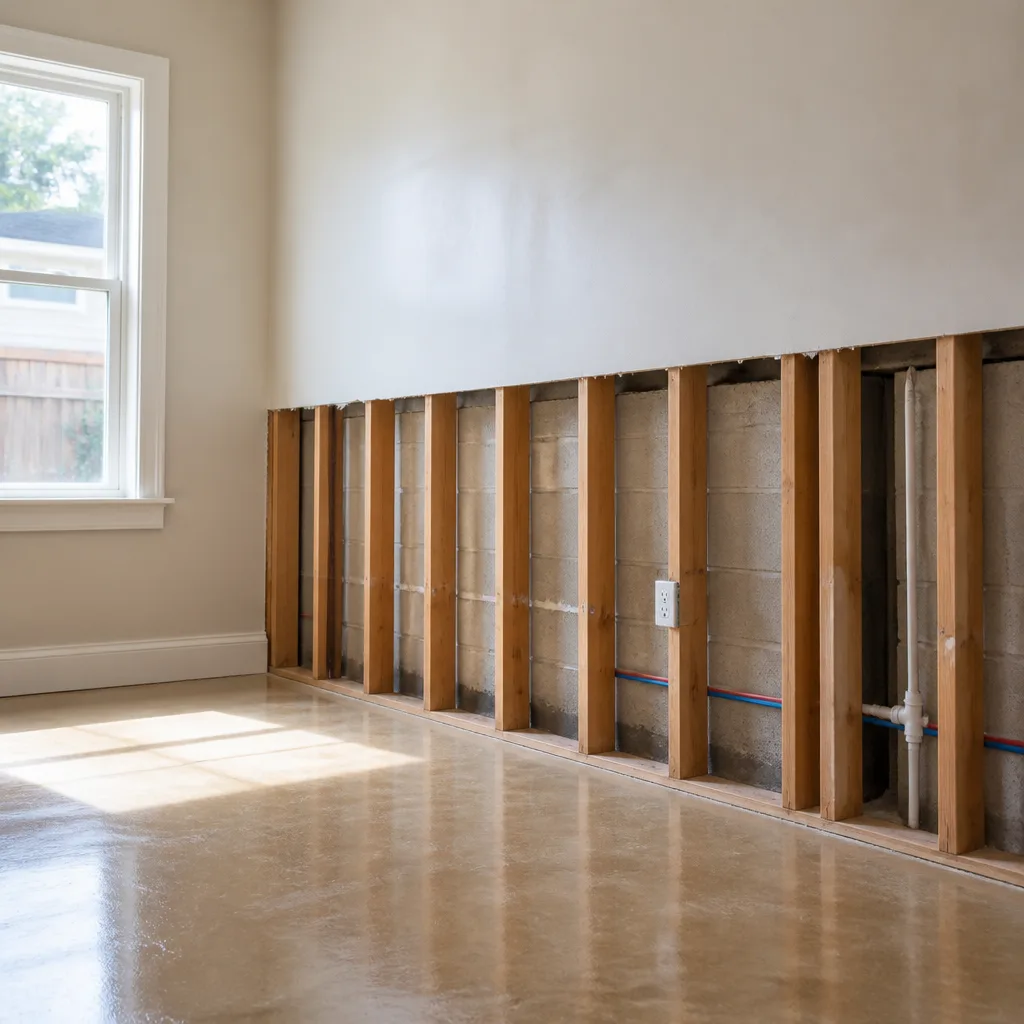
The category matters most for material disposal decisions, not just drying. Category 2 water that touched carpet pad means the pad gets cut and discarded, no exceptions under IICRC S500 protocol. Category 2 or 3 water that sat in wall cavities for more than 48 hours typically means baseboard removal and cavity inspection, not just drying. That’s where the 40 to 60 percent quote gap comes from: one contractor plans for cavity drying with Injectidry systems, another plans to open every wall. The Injectidry approach costs less on demolition and reconstruction, even though the equipment line item sits higher.
Our Water Damage Restoration in Murrieta technicians classify every loss per IICRC S500 before touching a single piece of equipment, because classification dictates everything from how many air movers we set to what gets disposed of versus dried in place.
The Equipment Line Item: Dehumidifiers, Air Movers, and Why Cheap Quotes Cut Here First
A restoration estimate that shows fewer dehumidifiers and air movers isn’t automatically a better deal. It’s often a slower drying plan. The IICRC S500 standard provides a formula for how many air movers a space needs based on square footage and class of loss. Skimping on either means each dehumidifier runs longer, pushing labor costs up day over day and extending the window where mold can take hold. What looks like a $400 savings on equipment becomes a $1,500 overage in labor and a substantially higher mold risk. That’s the trade nobody puts on the quote.
What You Should See on an Equipment Line Item
- LGR (low-grain refrigerant) dehumidifiers: Daily rate of $45 to $85 per unit in Murrieta’s market. A 3-room Category 2 loss typically requires 2 to 4 units.
- Air movers: $25 to $45 per day each. The S500 formula generally calls for 1 air mover per 50 to 70 square feet of affected wet surface.
- Air scrubbers (HEPA): $75 to $150 per day. Required on Category 3 losses and any mold or fire job with air quality concerns.
- Injectidry in-place drying systems: $150 to $350 per day for targeted cavity or under-slab drying. These cut demolition costs substantially when wall cavities and subfloors are the problem.
- Antimicrobial treatment: $0.15 to $0.50 per square foot of affected surface. Should include EPA-registered antimicrobial application on affected materials. Should NOT include “fogging the whole house” unless there’s verified airborne contamination. Be wary of quotes that bundle heavy antimicrobial charges without specifying what surface, what product, and what standard justifies it.
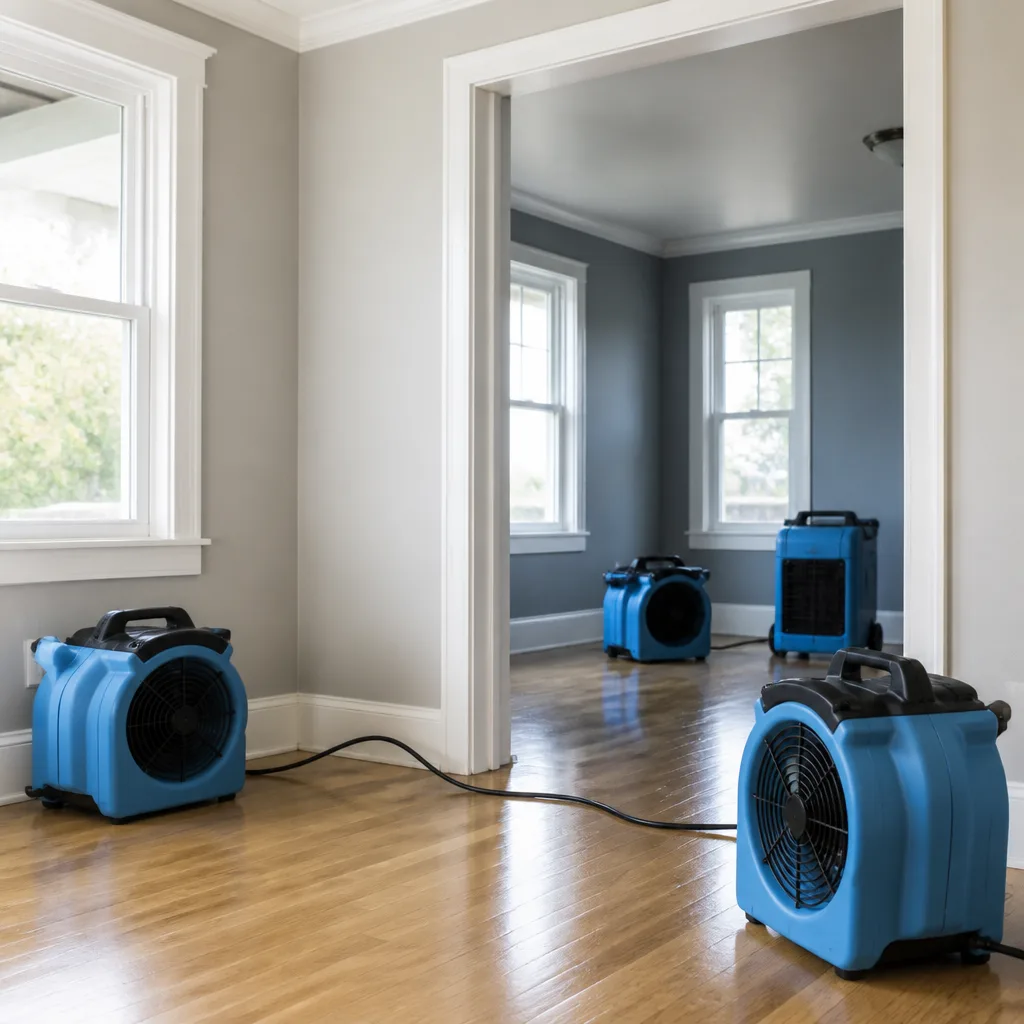
We run professional-grade drying equipment made by Dri-Eaz, Phoenix, and XPOWER on every applicable job in Murrieta. These are the same brands used on large commercial restoration projects across Southern California, not rental-counter units. The reason equipment brand matters is moisture removal rate consistency: a commercial LGR from Phoenix pulls a predictable amount of water per day, which lets a technician calculate a drying target date instead of guessing. When a Murrieta home has water trapped in a slab-built wall cavity, we use Injectidry panels to dry the cavity from the inside rather than tearing out drywall that could be saved. That’s drying science, not guesswork.
Murrieta-Specific Cost Factors: Slab Construction, Hard Water, and Summer Heat
Murrieta’s housing stock and climate shape restoration costs in ways national pricing guides miss. Most homes here sit on slab-on-grade foundations. There’s no basement and often no crawlspace. That sounds like a cost saver until water gets under the slab itself, and then you’re looking at under-slab drying systems, moisture sensor arrays, and the most expensive equipment line item in residential restoration. Contrast that with a Riverside County home on a raised foundation with a crawlspace: water under the subfloor dries with far less equipment. The same visible leak costs more to remediate in Murrieta when the water traveled under slab.
Hard water matters too. Temecula and Murrieta tap water carries high mineral content. When a supply line bursts and sprays hard water across drywall and framing, the dissolved minerals stay behind as the water evaporates. That residue can leave visible staining even after professional drying, pushing more material into the replace category than a comparable loss in a soft-water region. Contractors working Murrieta regularly account for this in their demolition scope, and it’s a legitimate line item that a generalized national estimator won’t include.
Summer heat is another quiet cost driver. During July and August, Murrieta temperatures can exceed 100 degrees. That accelerates evaporation on the surface but often drives moisture deeper into materials before equipment arrives. A water loss that would take 3 days to dry in October can take 5 in August if the water had time to wick into wall cavities before mitigation started. More drying days means more equipment rental time and more monitoring visits. It’s not a contractor marking up; it’s physics working against the job.
When you’re comparing quotes in Murrieta, ask whether the contractor is factoring slab construction and hard water staining into their scope, and whether they follow the Damage Restoration Permits, Codes & Inspections in CA: What You Need to Know. If they give you a blank look, they’re probably running a generic national pricing tool with no local adjustment. That’s the company that will discover the extra cost mid-project and send you a change order.
How Xactimate Works and Why It Matters for Your Insurance Claim
Xactimate is the estimating software most insurance carriers and restoration contractors in Riverside County use to price damage claims. It contains a database of line items with regional pricing: tear out and bag 100 square feet of wet carpet, set and monitor 3 air movers for 5 days, apply antimicrobial to affected surfaces. Each line has a code and a unit cost that’s updated to reflect regional labor and material rates.
If your claim involves insurance, your contractor’s estimate should map line by line to Xactimate conventions. That doesn’t mean insurance will approve everything the contractor submits. Adjusters in Riverside County routinely dispute specific line items, and knowing which ones helps you understand the pushback when it comes. These are the most common disputes we see:
- Drying duration beyond 5 days: Adjusters expect drying target dates supported by psychrometric readings. Your contractor should document daily moisture readings to justify any extension.
- Antimicrobial treatment on Category 1 losses: Insurers may question antimicrobial application when the water source was clean. Contractors need to justify scope beyond the water category if they’re treating due to elapsed time or material type.
- Content manipulation and pack-out charges: Moving furniture and boxing contents is billable, but without a detailed content inventory, adjusters often trim it.
- Injectidry or specialty drying systems: In-place drying is sometimes cheaper than demo and rebuild, but if the adjuster isn’t familiar with the technique, line items for specialty drying can get questioned. Documentation of moisture mapping helps.
- Emergency service calls and after-hours rates: These get scrutinized the hardest. If the loss happened at 2 a.m. and the contractor is billing after-hours emergency rates, the timeline needs to be clean.
The key to avoiding a blown claim isn’t finding a contractor who never gets a line item questioned. It’s finding one whose documentation is good enough to defend the charges. Photo-documented assessments, daily moisture logs, and a written scope before work starts are the difference between a claim that stalls and one that settles.
Mitigation vs. Reconstruction: Why You’ll Get Two Bills and How to Avoid Double-Paying
Restoration is really two different businesses stitched together by the same insurance claim. Mitigation is emergency work: extracting water, setting drying equipment, removing unsalvageable materials, treating for microbial growth. Reconstruction is the rebuild: drywall, paint, flooring, cabinets. The first is priced like an emergency service. The second is priced like a remodel. Different labor rates, different margins, different timelines.
When one contractor handles both phases, there’s an efficiency advantage you’re paying for. But it’s also where double-billing can occur, either accidentally or through sloppy scoping. Here’s how to protect yourself when you’re reviewing the combined estimate:
- Ask for separate scopes. Mitigation and reconstruction should be scoped as two separate documents with two separate totals, even if the same company does both.
- Check for duplicate disposal charges. Debris from mitigation (cut carpet, torn out drywall) shouldn’t appear again as disposal on the reconstruction side.
- Verify overlap on equipment monitoring. You shouldn’t be billed for daily monitoring visits during reconstruction. Monitoring ends when drying is complete.
- Request a written scope before work starts. Not an estimate, a scope. It should list what gets removed, what gets dried in place, what gets rebuilt, and what’s excluded. If it’s vague, that’s where change orders will grow.
The companies that do this cleanly are the ones with credentialed project managers who understand both sides of the coin. When we handle a Mold Remediation in Murrieta job that cascaded from a water loss, the same IICRC-certified team manages both phases with separate scopes and a single point of accountability. No handoff to a third-party reconstruction crew, no fingerpointing when a line item gets questioned.
Mold Remediation Costs in Murrieta: What’s Included and What’s Not
Mold remediation in Murrieta ranges from $500 for a contained bathroom ceiling patch to $6,000 for a full containment and air scrubbing scenario affecting multiple rooms. The spread is driven by containment requirements, not the amount of visible mold itself. Here’s the breakdown:
- Small isolated cases (under 10 sq ft): $500 to $1,500. Typically no full containment needed. Includes cleaning, treatment, and addressing the moisture source.
- Moderate cases (10 to 100 sq ft): $1,500 to $4,000. Includes containment barriers, HEPA air scrubbing, and removal of affected materials like drywall or baseboard.
- Large or multi-room cases (over 100 sq ft): $4,000 to $9,000 or more. Full containment, negative air pressure, and possibly bathroom or kitchen fixture removal.
What should be included in any legitimate mold remediation scope: containment, HEPA-filtered air scrubbing during and after removal, EPA-registered antimicrobial treatment of remaining surfaces, and a post-remediation visual clearance inspection. What should not be included: heavy charges for “whole-house fogging” without current air quality sampling justifying it, and any quote that doesn’t address the underlying moisture source. Mold returns if the water problem isn’t fixed first.
The IICRC S520 standard is the published reference for professional mold remediation. Contractors claiming credentialing should be able to walk you through their S520-compliant process without hand-waving. In our experience across Murrieta’s housing stock, the most common trigger is a slow leak that went unnoticed: a toilet wax ring that failed in a slab floor, a water heater in a hall closet against drywall, an HVAC condensate line clog. None of these announce themselves. By the time the homeowner sees staining, the mold has usually been active for weeks.
Fire Damage Restoration Costs: Smoke, Soot, and the Structural Unknowns
Fire damage restoration pricing in Murrieta spans a wider range than water or mold, because the scope is defined by what burned, what the smoke touched, and what the water from the fire department soaked. Here are realistic 2026 ranges:
- Small kitchen grease fire with no structural damage: $3,000 to $8,000. Smoke and soot cleanup on surfaces, cabinets, and contents, plus air scrubbing.
- Attic or electrical fire with moderate structural impact: $8,000 to $25,000. Includes structural drying from fire suppression water, soot removal from framing, and partial reconstruction.
- Multi-room fire with significant structural loss: $25,000 to $60,000 or more. Full reconstruction scope, content cleaning or pack-out, and extended timeline.
Smoke damage is the sneaky cost line. Smoke travels far beyond the burn site, infiltrating wall cavities, ductwork, and insulation. If the restoration plan only addresses visible soot and skips cavity inspection, the smell returns, and so does the claim. The IICRC S700 standard for fire and smoke restoration covers these secondary damage pathways. On Fire Damage Restoration in Murrieta work, we inspect smoke pathways the same way we inspect water migration paths: systematically, with documentation, rather than treating what’s visible and hoping for the best.
One credentialed team handles water, mold, and fire damage, and that matters more than most homeowners realize. A fire in a Murrieta home always involves water damage from the fire department response. That water damage, if not dried properly, becomes mold within 48 to 72 hours. If your fire restoration contractor sub-contracts the water portion to someone else, you’ve just split accountability on a job where the damage types are interconnected.
Common Mistakes to Avoid
- Choosing the lowest equipment line item without asking about drying targets. Fewer dehumidifiers means more drying days and a wider mold window. Ask the contractor what their target moisture reading is and on what day they expect to hit it.
- Waiting to call after a water event in summer heat. A Murrieta home at 100 degrees is an incubator for mold growth. Every 24 hours of delay can add a full day of drying and potentially expand the remediation scope.
- Not separating mitigation from reconstruction in the contract. If it’s all one number on one document, you can’t see what you’re paying for when and can’t catch duplicate charges.
- Assuming insurance covers everything without reviewing the scope. Adjusters approve what the documentation supports. If your contractor can’t produce moisture logs and photo evidence, expect line item pushback.
- Ignoring the category of water when reviewing a cleanup plan. A Category 2 loss treated like a Category 1 spill leaves contamination behind. The savings you see now becomes a mold problem you pay for later.
- Avoiding slab inspection when the leak is near an exterior wall on a slab foundation. Water can travel under the slab and into wall cavities through the sill plate. Neglecting this check on a Murrieta slab home is the single most common way a “small” leak becomes an expensive one.
- Signing with a contractor who uses rental-counter drying equipment. Consumer-grade dehumidifiers and fans aren’t designed for structural drying. They run louder, pull less moisture per day, and extend the job’s timeline.
When to Call a Professional
Any water loss that involves Category 2 or Category 3 water, any visible mold growth larger than a dinner plate, and any fire that required fire department response should trigger a professional restoration call. Structural drying, microbial remediation, and smoke removal are not DIY projects, and the failure mode is expensive and often hidden. You can’t verify moisture levels in a wall cavity without the right meters, and you can’t confirm mold is gone without knowing the IICRC S520 clearance criteria. If you’re in Murrieta and you’re not sure whether your situation warrants professional help, review our Damage Restoration Emergency Preparedness Guide for Murrieta Homes, then describe the scenario to a certified company and let them tell you what they’d do and why. Whitehall Water Damage offers free estimates in Murrieta, call (844) 643-8708.
Frequently Asked Questions
Expect to pay $1,800 to $7,500 for most residential water damage restoration projects in Murrieta, with smaller Category 1 losses starting around $800 and severe Category 3 or Class 4 losses exceeding $12,000. The cost depends primarily on the water’s category and class, how many days of drying equipment the job requires, and whether demolition is needed. Call (844) 643-8708 for a free estimate based on your specific situation.
Most Murrieta homeowner policies cover sudden and accidental water damage, such as a burst pipe or supply line failure, but exclude gradual leaks and pre-existing mold. Coverage depends on your policy terms and documentation of the loss. Contractors who provide photo evidence, moisture readings, and Xactimate-compatible scopes give your claim the best chance of approval.
Emergency response for water damage in Murrieta should begin the same day you call, because every hour of standing water extends drying time and increases contamination levels. Whitehall Water Damage dispatches IICRC-certified technicians to Murrieta properties and starts mitigation immediately. Call (844) 643-8708 to start the process now.
Mold growth larger than 10 square feet, mold triggered by Category 2 or 3 water, or mold hidden in wall cavities and HVAC systems requires professional remediation per IICRC S520 standards, not surface cleaning. Surface cleaning without addressing the moisture source or hidden contamination leaves spores behind and the mold returns. A certified assessment will tell you which scenario you’re dealing with.
Mitigation covers the emergency phase: extraction, equipment setup, drying, and removal of unsalvageable materials. Restoration covers rebuilding what was removed: drywall, flooring, paint, and fixtures. They’re billed separately, even when the same contractor does both, because they involve different labor rates and different scopes.
Your restoration contractor should provide documentation your adjuster can review: photo evidence, daily moisture logs, equipment usage records, and Xactimate-compatible line item scopes. You remain the point of contact with your insurance company, but a contractor experienced in Riverside County claims knows what documentation prevents disputes and can coordinate directly with the adjuster when needed.
Typical water damage drying in Murrieta takes 3 to 5 days during mild weather, but can extend to 5 to 7 days during summer heat waves when water has wicked deeper into slab-connected wall cavities. Mold remediation typically takes 2 to 5 days depending on containment size. Fire damage restoration ranges from one week for small smoke jobs to several months for structural rebuilds.
The Bottom Line
Restoration costs in Murrieta hinge on classifications, drying science, and documentation more than most homeowners expect. A cheap quote that cuts equipment and skips cavity inspection is covering less scope, not doing the same job for less money. Ask for IICRC classifications, written scopes with separate mitigation and reconstruction totals, documented drying plans, and equipment that can deliver the moisture removal rates your home’s construction demands. If you’re facing water, mold, or fire damage in Murrieta, start with a professional assessment from a credentialed team. Whitehall Water Damage home offers free estimates. Call (844) 643-8708 to get someone on site who can document your loss, scope the work properly, and walk you through the numbers line by line.
Written by the team at Whitehall Water Damage, serving Murrieta since 2015. Explore more guides & resources on our blog.
See the difference
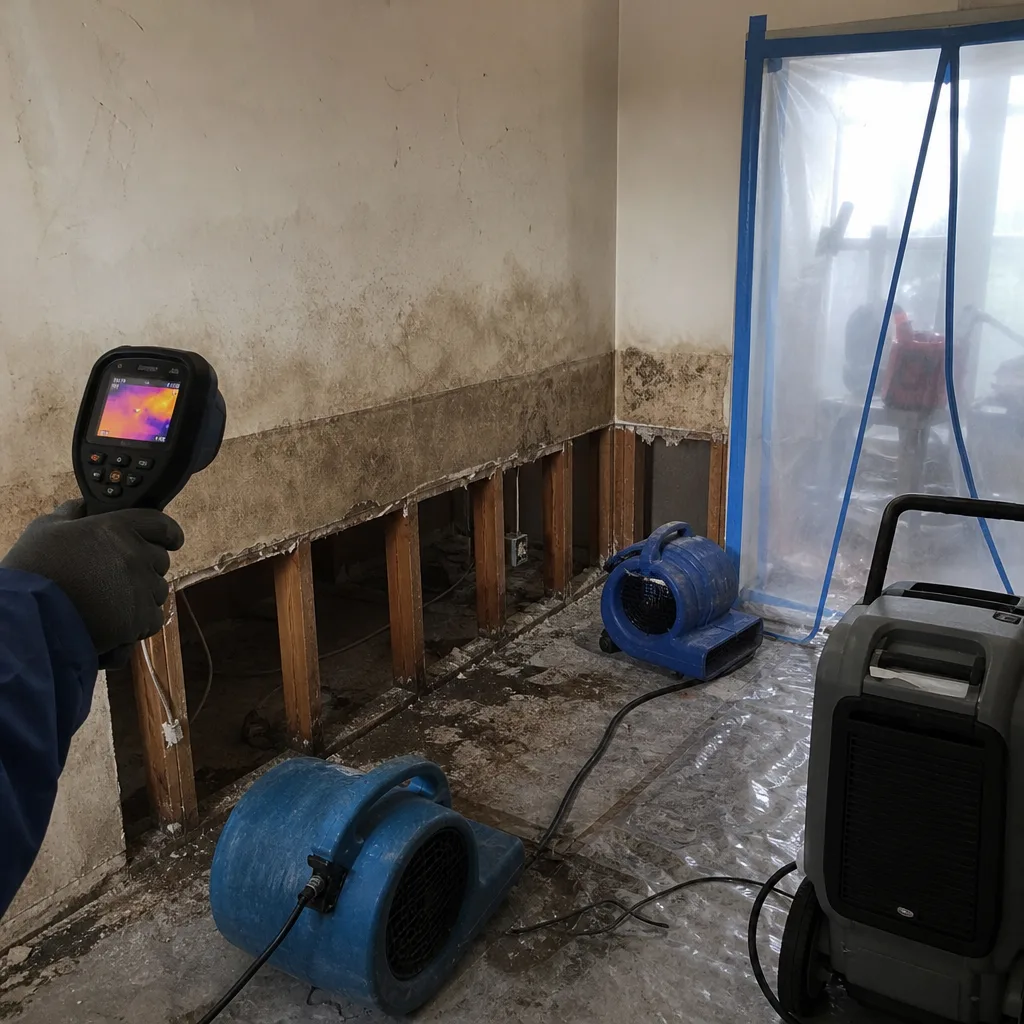 Before
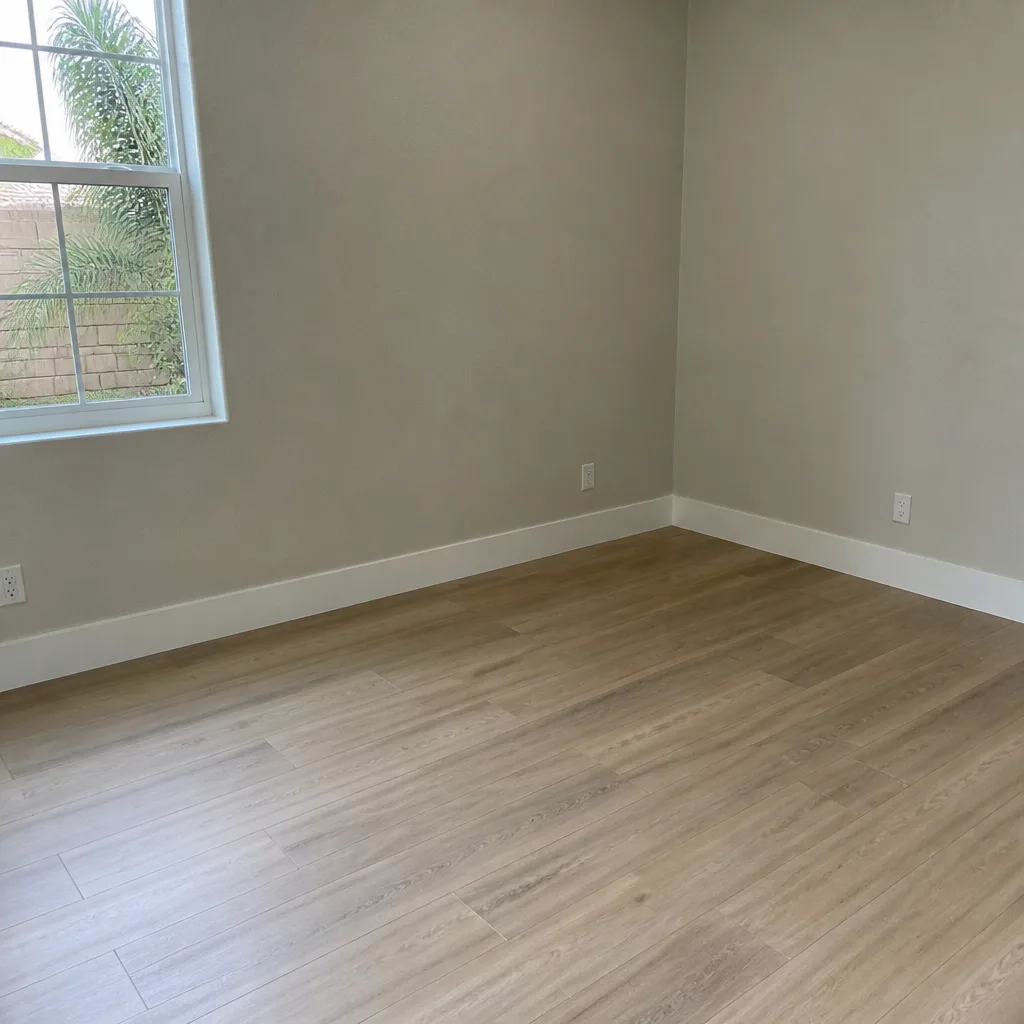 After
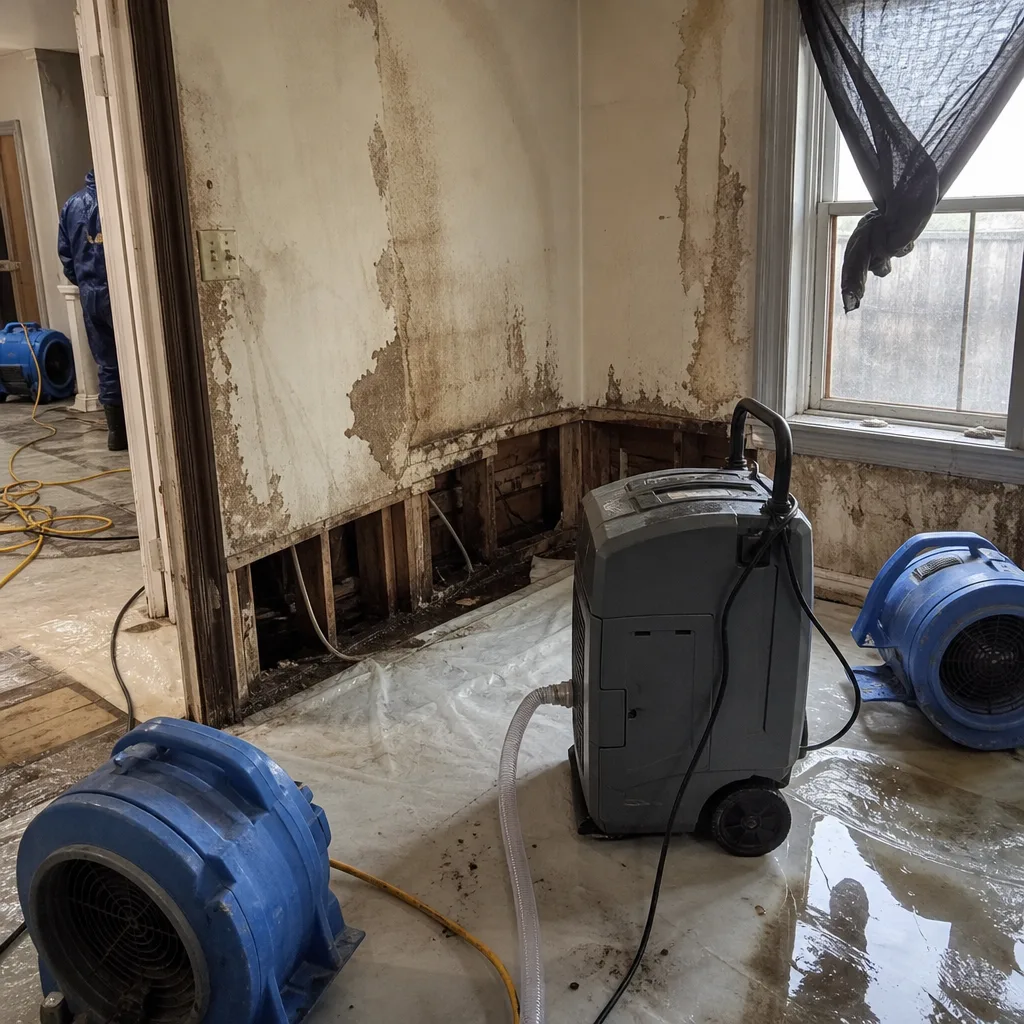 Before
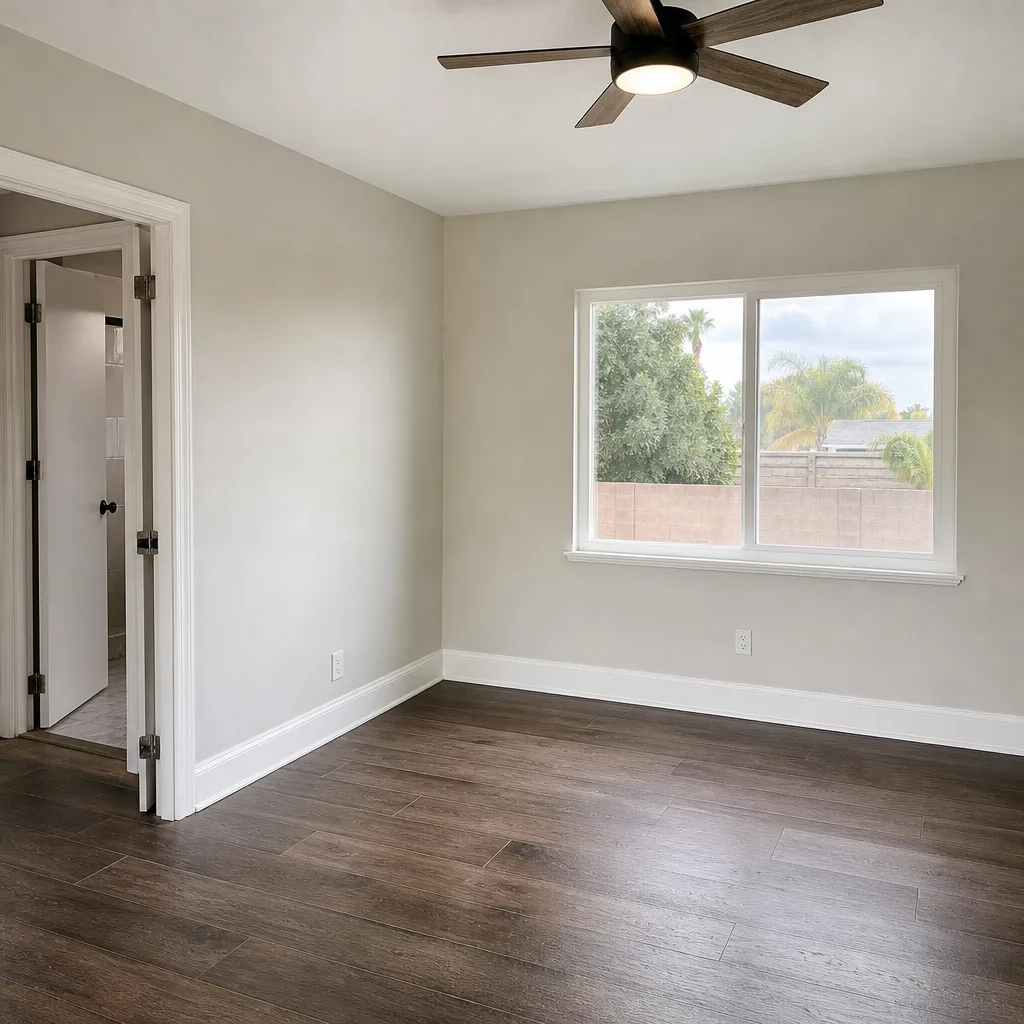 After
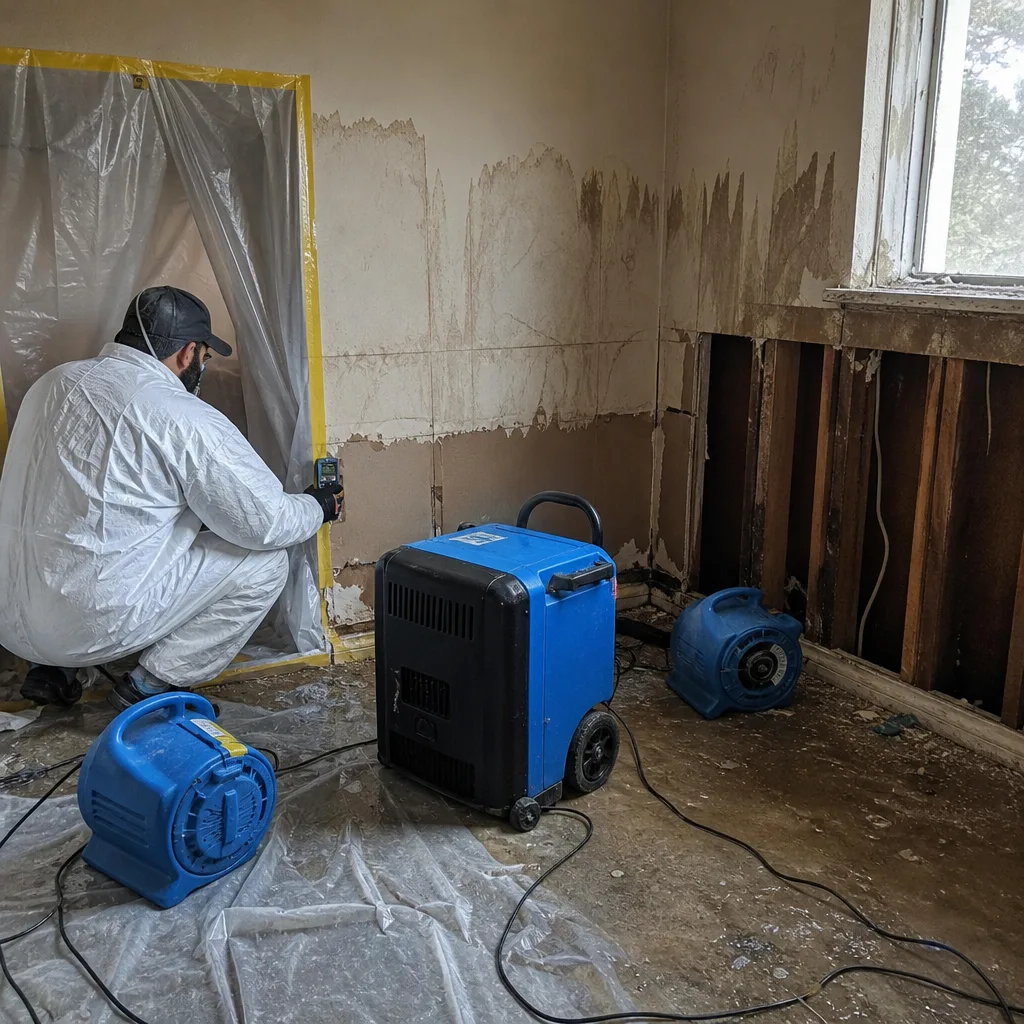 Before
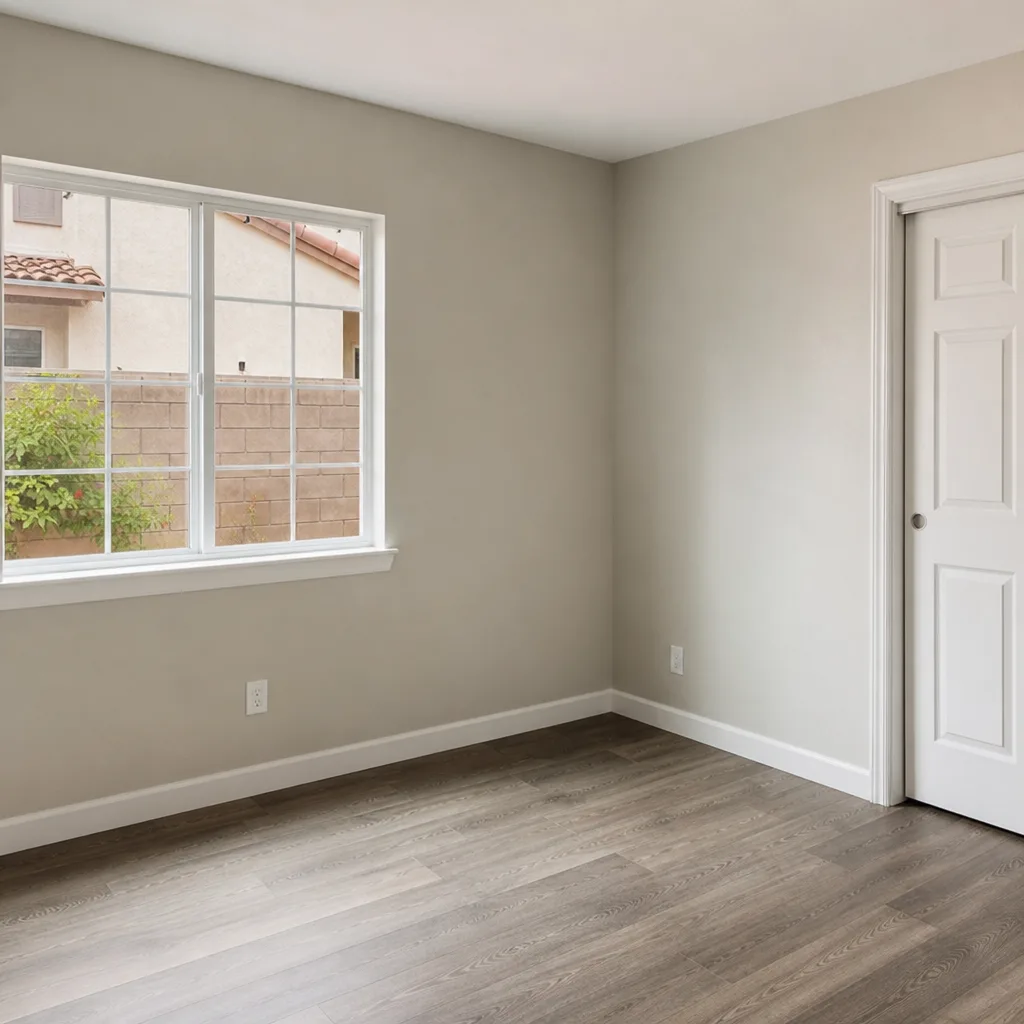 After