Last updated October 30, 2026
 Water damage drying
 Fire & smoke cleanup
 Mold remediation
 Storm response
 Sewage cleanup
 Reconstruction
Free visual inspection and a written scope of work before any mitigation begins - photos, moisture readings, and drying logs go in your claim file
The scope we write is the scope we bill. Anything new gets shown to you, in writing, before we touch it.
Get your free estimateChoosing the Right Damage Restoration Brand: A Buyer’s Guide for Murrieta
Here is a fact that surprises most Murrieta homeowners: the brand name printed on a restoration truck is often the least informative thing about the crew that will walk through your door. In the damage restoration industry, two companies operating under the same national franchise banner in the same Riverside County market can differ wildly in technician training, drying equipment, and accountability. What actually determines whether your water damage gets dried correctly or your mold gets remediated to a standard that holds up to an adjuster’s scrutiny has almost nothing to do with logo recognition. It has everything to do with credentials, equipment, and documentation. This guide explains how to evaluate restoration providers at that operational level, with specific context for the Murrieta market; for a deeper dive, see The Complete Guide to Damage Restoration in Murrieta.
Quick Answer
The best damage restoration company in Murrieta CA is not determined by franchise recognition but by verifiable credentials (IICRC, RIA, IFA), commercial-grade drying equipment, and documented quality processes. When comparing providers, verify certifications independently, ask what specific equipment brands they run, and request a sample moisture log from a completed project. Companies that hold multiple industry credentials and operate professional drying systems like Dri-Eaz, Phoenix, and Injectidry typically deliver materially better structural outcomes than operators running consumer-grade gear.
Restoration work we handle
Table of Contents
- Franchise vs. Independent vs. Certified Specialist: What the Differences Actually Mean
- Credential Stacking: Why IICRC Plus RIA Plus IFA Matters More Than One Logo
- The Equipment Inventory Question: Commercial-Grade Drying Science vs. Portable Units
- In-Place Drying and Injectidry Systems: Reducing Demolition in Murrieta Homes
- Documentation Culture: The Moisture Log Test
- Local Accountability Factors for Murrieta Homeowners
- Common Mistakes to Avoid
- When to Call a Professional
- Frequently Asked Questions
Franchise vs. Independent vs. Certified Specialist: What the Differences Actually Mean
Restoration companies in Murrieta fall into three rough categories, and each operates with a fundamentally different business model. Understanding the structural differences helps you predict what kind of service you will receive before you ever make the call.
A national franchise generally sets a floor, not a ceiling. Franchise agreements typically require baseline equipment inventories and minimum technician training, but the actual execution depends on the individual owner of that territory. One franchise location in Riverside County may invest heavily in continuing education and commercial drying systems, while another location of the same brand in a neighboring market runs older equipment with technicians who hold only entry-level certifications. The brand name tells you the marketing standard. It does not tell you the operational standard.
An independent restoration company answers only to its own leadership. That can mean excellent performance if the owner is a career restoration specialist who invests in training and equipment. It can also mean inconsistent quality if the business operates as a general contractor that occasionally handles water damage. Independence itself is not a quality signal. Independence combined with credentialing is.
A certified specialist operates to published industry standards and holds accountability to outside organizations. This is the model where the company’s work is performed to IICRC S500, S520, and S700 guidelines: the published industry standards for water, mold, and fire restoration respectively. These are not marketing phrases. They are technical documents that specify drying procedures, containment protocols, and documentation requirements. When a Murrieta restoration company states that its work follows these standards, that is a verifiable claim, not a slogan. Whitehall Water Damage home operates on this model, with IICRC-certified technicians following documented restoration protocols on every project.
The practical takeaway for a Murrieta homeowner facing a broken supply line or a discovered mold colony: ask the company which model it operates under. If the answer is vague, ask who specifically holds which certifications and whether the company’s principals are listed on the relevant licenses. Specific answers indicate operational clarity.
Credential Stacking: Why IICRC Plus RIA Plus IFA Matters More Than One Logo
Most restoration companies display some kind of certification logo. Many display one. Far fewer hold credentials from multiple independent organizations. In the Murrieta market, credential stacking is one of the clearest available signals of a company that takes its work seriously, because each credential represents a different kind of accountability.
IICRC certification focuses on technical competency. The Institute of Inspection, Cleaning and Restoration Certification is the recognized standard-setter for hands-on restoration work in the United States. An IICRC-certified technician has demonstrated knowledge of water damage restoration, mold remediation, fire and smoke restoration, or related disciplines through standardized examination. IICRC-certified restoration professionals are the gold standard for the damage restoration industry, and when a company states its work follows IICRC S500 for water, S520 for mold, and S700 for fire, you have a referenceable standard against which to evaluate the work.
RIA membership adds a layer of industry accountability. The Restoration Industry Association is the oldest trade association in the restoration space. Membership signals that a company participates in the broader professional community, tracks industry developments, and maintains relationships with peers and suppliers. It is not a technical certification, but it indicates organizational maturity.
IFA (which encompasses indoor air quality, flood, and fire associations) brings environmental health into the picture. Mold remediation and fire restoration both have significant indoor air quality implications. A company that maintains IFA affiliation is signaling that it understands the environmental dimension of restoration work, not just the structural dimension.
Here is how to verify all of this before signing a work authorization. IICRC maintains a public directory of certified firms and technicians. RIA and IFA both maintain member directories. When a Murrieta restoration company claims these credentials, you can check each one independently in under ten minutes. A company holding all three and willing to point you to the verification directories is demonstrating exactly the kind of transparency you want from a firm that will be inside your walls with drying equipment for days at a time. In our experience, companies that stack credentials are also the companies that document their work properly, a correlation explored further below.
The Equipment Inventory Question: Commercial-Grade Drying Science vs. Portable Units
This is the single most operationally consequential difference between restoration companies in Murrieta, and it is the one homeowners almost never ask about; our Complete Water Damage Restoration Guide for Murrieta Homeowners covers additional questions worth asking. The equipment a company deploys determines how fast your structure dries, how completely it dries, and whether you get secondary damage like warped flooring or hidden mold growth six months later.
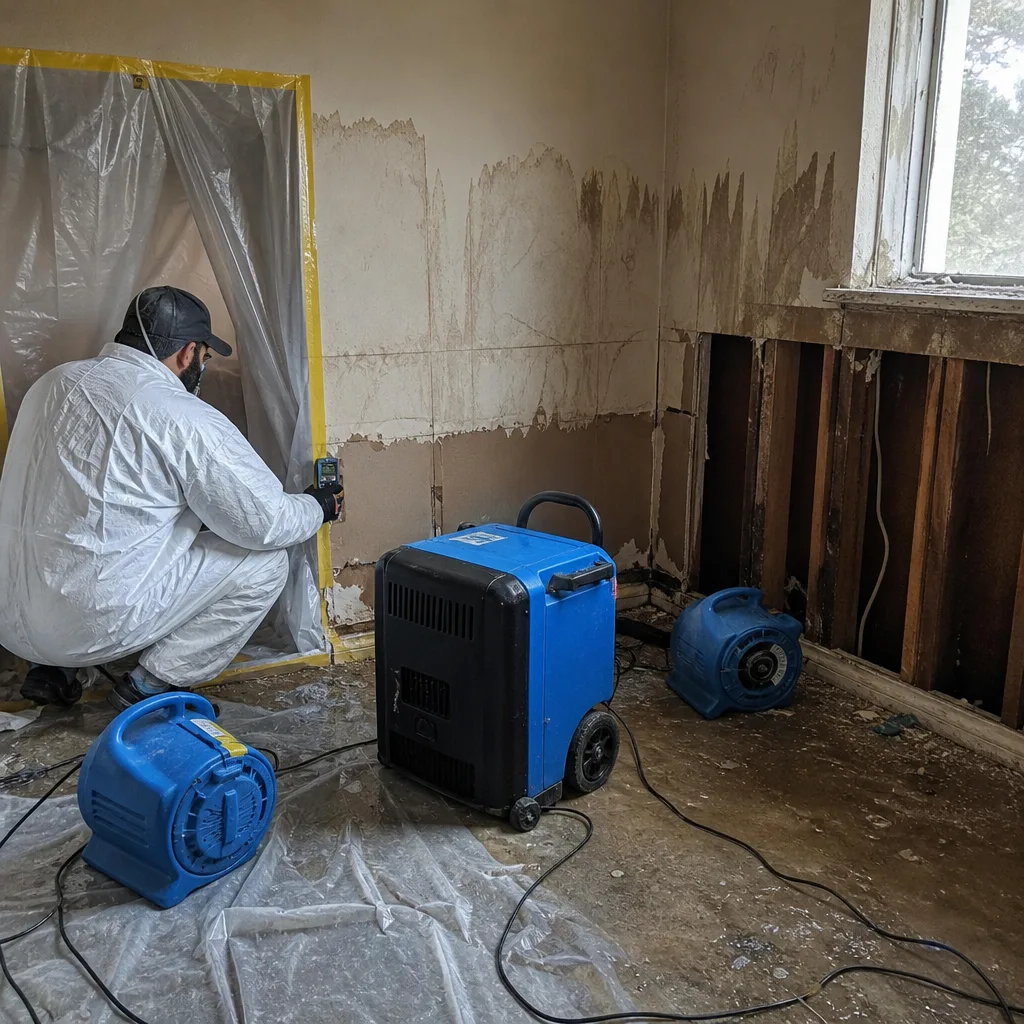
Commercial-grade low-grain refrigerant (LGR) dehumidifiers from manufacturers like Dri-Eaz and Phoenix remove dramatically more moisture per day than portable consumer units sold at hardware stores. They also continue extracting water at lower humidity levels than consumer machines, which matters because structural drying requires getting wood and drywall down to specific moisture content targets. A consumer dehumidifier might reduce the feel of humidity in a room while leaving enough moisture trapped in wall cavities to support mold growth. Commercial LGR units are engineered to pull moisture from building materials, not just air.
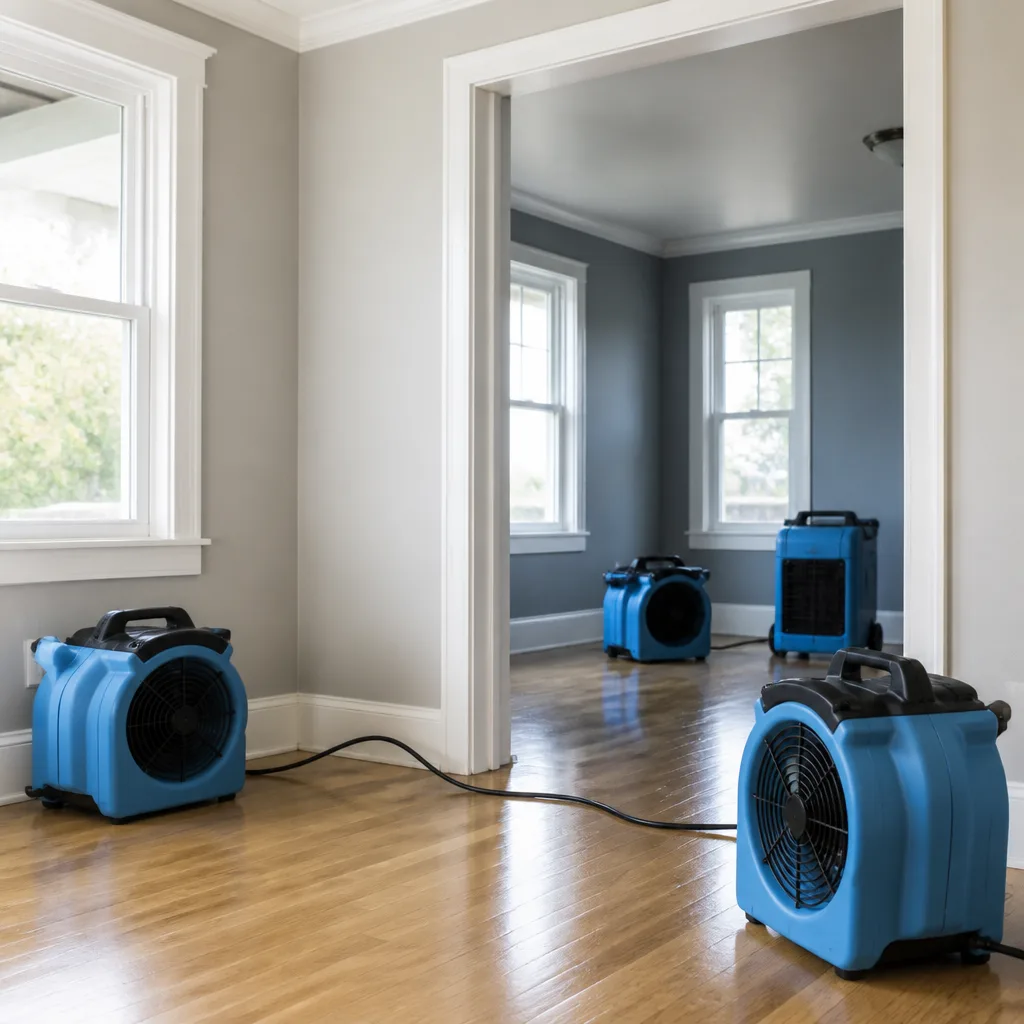
Air movement matters equally. Professional axial and centrifugal air movers from XPOWER and B-Air create the high-velocity airflow patterns required to evaporate moisture from saturated materials. The placement and count of these units is a science: too few air movers and drying takes weeks; too many in the wrong configuration and you can actually drive moisture deeper into certain materials. IICRC-certified technicians following documented restoration protocols calculate air mover placement based on the class of water damage and the affected square footage.
The five distinct professional brands in our equipment fleet, Dri-Eaz, Phoenix, XPOWER, B-Air, and Injectidry, represent a deliberate investment in matching the right tool to the specific loss type. A three-story Murrieta home with water traveling from a second-floor bathroom through ceiling joists into a first-floor wall cavity requires different drying approaches than a single-story slab foundation home with a slab leak. One-machine-fits-all approaches are the hallmark of operators who are not equipped for the range of real-world damage scenarios in Riverside County homes.
Before hiring, ask the company what brands they run and why. A company that can explain its equipment choices in technical terms is a company that understands drying science. A company that says it uses “professional equipment” without specifics is often running hardware-store rentals.
In-Place Drying and Injectidry Systems: Reducing Demolition in Murrieta Homes
Demolition is expensive, disruptive, and sometimes unnecessary. Yet a surprising number of Murrieta restoration jobs proceed straight to removal when in-place drying technologies could have preserved the structure. Understanding this distinction can save you thousands of dollars and weeks of reconstruction time.
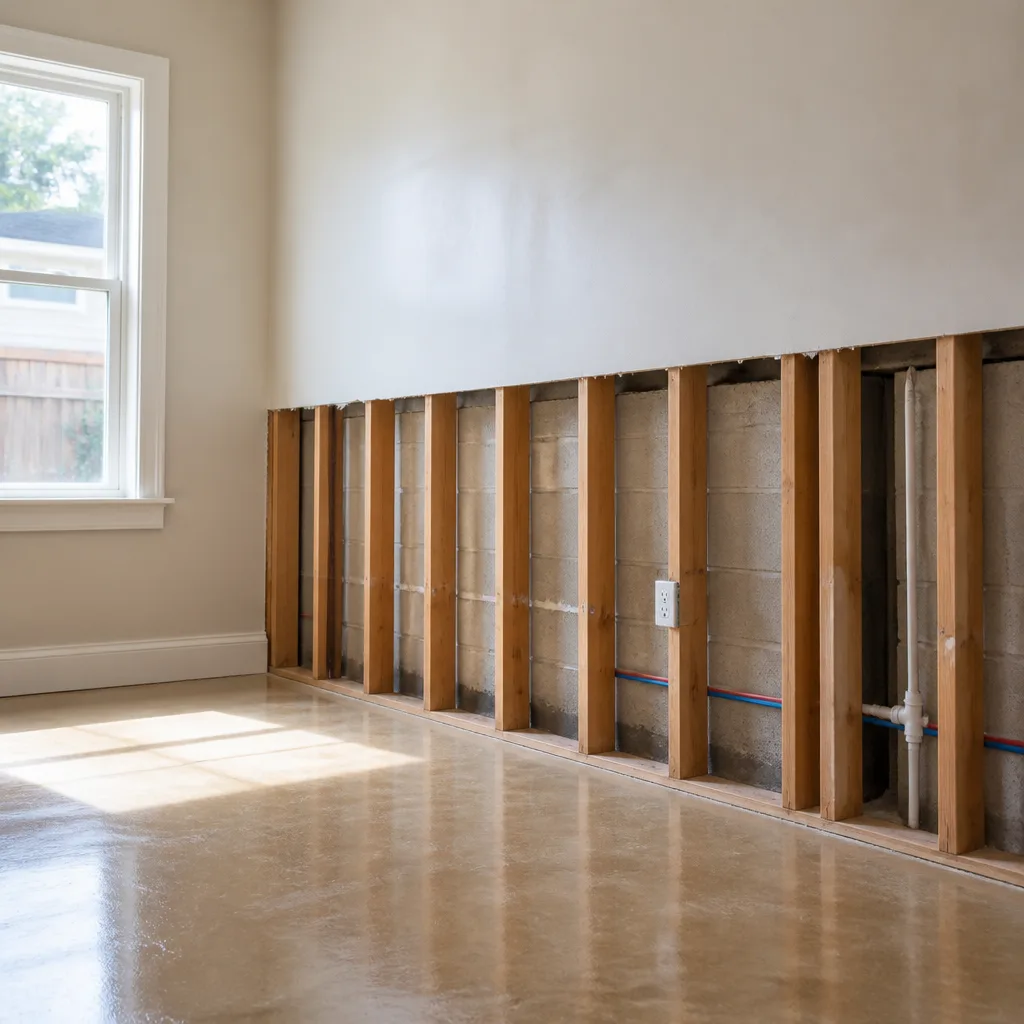
Traditional drying methods work well for open spaces: a flooded living room with exposed drywall and wood flooring responds to properly placed dehumidifiers and air movers. But water that travels inside wall cavities, under subfloors, or behind cabinetry is far harder to dry. Conventional approaches require removing the finished surface to expose the wet cavity, which means cutting out drywall, pulling up flooring, or dismantling cabinets. That demolition is then followed by reconstruction, which adds cost, time, and the inevitable dust and disruption of a remodel.
Injectidry systems solve this problem through targeted in-place drying. These are essentially vacuum and injection panels that create directed airflow inside enclosed cavities. A small access point allows the system to pull air through the cavity, evaporating trapped moisture without removing the finished surface. The same principle applies to subfloors and other hard-to-reach areas. In-place drying with Injectidry systems to protect structure and reduce demolition is a technique we use regularly on Murrieta homes where water has traveled behind baseboards or under tile on wood substrates.
The operational difference matters because demolition is where restoration costs escalate rapidly. Every linear foot of drywall removed must be replaced, taped, textured, and painted. Every section of flooring pulled up requires new material and installation. Injectidry technology enables cavity drying without unnecessary demolition, which means faster timelines and lower disruption. It also preserves original building materials, which matters in older Murrieta neighborhoods where matching existing finishes can be difficult.
Ask any restoration contractor you are considering whether they own Injectidry systems or equivalent in-place drying technology. The answer tells you whether they are equipped to minimize demolition on your project or whether their default approach is cut and replace. There are cases where demolition is genuinely required, but a contractor who cannot offer in-place drying is not giving you the full range of options.
Documentation Culture: The Moisture Log Test
Here is a question you can ask any restoration company before hiring, and the answer will tell you more about their operational rigor than any marketing brochure. Ask for a sample moisture log from a completed project. Companies with rigorous documentation practices will have one immediately available, and it will be dense with daily psychrometric data.
A proper moisture log tracks specific metrics every day the drying equipment runs. It records the moisture content of affected materials, measured with moisture meters at multiple points. It records the temperature and relative humidity of the affected space. It records the grains per pound of moisture in the air, a psychrometric calculation that tells you how much water the air is actually carrying. It tracks the dehumidifiers’ water removal volumes. And it shows the drying goals the technician established at the outset, so you can see whether the job was completed to target or simply when the equipment was picked up.
This documentation matters for three reasons. First, it proves the drying was done correctly. In the absence of daily moisture readings, you have no way to verify that hidden cavities actually reached dry standard before the equipment was removed. Second, it protects you in the insurance process. When an adjuster reviews a water damage claim, documented drying logs support the scope of work and the duration of equipment rental. Companies that cannot produce moisture logs often face adjuster pushback on their invoices. Third, it signals operational discipline. A company that documents its drying processes is a company that trains its technicians to follow procedures, not to improvise.
For Murrieta homeowners, this test is especially relevant because of how quickly secondary damage develops in our climate. Riverside County’s warm temperatures accelerate mold growth in damp materials. A wall cavity that is not dried to standard within three to five days can support active mold colonization, even if the visible surface looks fine. Daily moisture readings catch under-drying before it becomes a long-term problem. If a company cannot or will not show you sample documentation, that is a signal about how they will treat your project. If they will, examine it for the level of detail described above. Water Damage Restoration in Murrieta demands this kind of rigor, and so should you.
Local Accountability Factors for Murrieta Homeowners
Restoration is a local business, even when the brand is national. The accountability structure of the specific company you hire matters more than the reach of the brand it operates under. In Murrieta, three local factors deserve your attention before you sign anything.
First, verify the CSLB license. The California Contractors State License Board requires restoration contractors performing work over $500 to hold a valid contractor’s license. You can check any license number at the CSLB website in under a minute. More importantly, check whose name is on the license. Some operations run jobs under someone else’s license number, a practice that creates genuine accountability problems if something goes wrong. A legitimate Murrieta restoration company will have its principals listed on the license, and the name on the license will match the name on the contract you sign.
Second, look for a physical office presence in Riverside County. This is not about walk-in convenience. A restoration company with a real office in the area has local accountability: they are answerable to the same community where they work, and they can respond to callbacks. Companies operating out of a PO box or a distant metro area may still do good work, but the accountability structure is weaker. Murrieta and the surrounding communities of Temecula, Wildomar, and Lake Elsinore are served best by restoration firms that are actually here.
Third, consider insurance relationships. Restoration work almost always involves an insurance claim, and the quality of the company’s documentation directly affects how smoothly that claim resolves. Companies that produce photo documentation, daily moisture logs, and detailed scopes of work make your adjuster’s job easier and your claim more likely to be approved at the full scope. We have seen too many Murrieta homeowners accept low settlement offers because their restoration contractor’s documentation did not support the full extent of the damage. Mold Remediation in Murrieta and the other services are all performed with documentation that holds up to adjuster scrutiny.
Common Mistakes to Avoid
- Choosing a company based solely on the name on the truck. Franchise brands set marketing standards, not operational standards, and the local execution varies dramatically. Verify certifications and equipment independently before deciding.
- Signing a work authorization under time pressure without reading it. Restoration is time-sensitive, but a legitimate Murrieta company will explain the document and give you time to review it. If you feel rushed, that is a signal.
- Hiring a company that does not provide written scope before starting work. A written scope of work agreed to before equipment goes in is your protection against surprise costs later. Companies that resist written scopes are a known risk pattern in this industry, particularly on mold jobs.
- Assuming your insurance adjuster will handle everything. Adjusters appreciate restoration companies with strong documentation, but they recommend based on their own lists. You have the right to choose your restoration provider, and that choice has consequences for the quality of the finished work.
- Prioritizing the lowest bid. Restoration pricing differences often reflect equipment differences: the company running commercial LGRs and Injectidry systems cannot bid at the same level as a company running household dehumidifiers, and you do not want them to.
- Skipping the credential verification step. IICRC, RIA, and IFA all maintain public directories. Checking them takes minutes and exposes unsubstantiated claims before they become your problem.
- Accepting demolition without exploring in-place drying. In many Murrieta water damage scenarios, targeted drying can preserve original materials and save significant reconstruction cost. Ask specifically whether the contractor offers in-place drying options.
When to Call a Professional
Some damage scenarios demand immediate professional attention. Water from a ruptured supply line or failing water heater continues causing damage every hour it remains unaddressed. Mold discovered during a renovation or after a past leak requires containment and remediation performed to IICRC S520 standards, not just surface cleaning. Fire damage, even in a contained kitchen event, leaves smoke residues that penetrate porous materials and require specialized cleaning protocols. In each of these scenarios, the cost of delay compounds quickly. If you are unsure whether your situation warrants professional attention, call a restoration company and describe the situation. Whitehall Water Damage offers free estimates in Murrieta, call (844) 643-8708. A knowledgeable technician can help you determine urgency and next steps over the phone.
Frequently Asked Questions
Water damage restoration in Murrieta typically ranges from $1,200 for minor category 1 water events affecting a single room to $15,000 or more for extensive category 3 damage requiring full demolition and rebuild. The variables include the category of water, the affected square footage, the equipment required, and whether in-place drying techniques can reduce the demolition scope. Call (844) 643-8708 for an exact quote based on your specific situation, estimates are free.
Most homeowner policies in Murrieta cover sudden and accidental water damage and fire damage, though mold remediation coverage often depends on the underlying cause and your specific policy terms. The quality of your restoration company’s documentation directly affects claim approval and settlement amounts, which is why photo documentation and daily moisture logs matter. A restoration team experienced with adjuster coordination helps the process move smoothly.
Reputable Murrieta restoration companies can typically respond to water damage emergencies within hours, as drying begins ideally within the first 24 to 48 hours to prevent secondary damage. Fire damage and mold remediation are evaluated, scoped, and scheduled with written documentation, not dispatched on an emergency timeline. Describe your situation when you call and the company will advise appropriate timing.
Surface mold on non-porous materials like tile or glass can sometimes be cleaned with appropriate products, but mold on drywall, wood, or other porous materials often extends deeper than the visible surface and requires professional assessment. Mold remediation performed to IICRC S520 standards includes containment, air filtration, removal of affected materials, and verification that airborne spore counts return to acceptable levels. Attempting DIY removal without containment can spread spores throughout your home. Call (844) 643-8708 for a professional assessment of your specific situation.
IICRC certification means the technician has passed standardized examinations demonstrating competency in restoration principles and practices. The IICRC is the recognized standard-setting body for the restoration industry, and its S500, S520, and S700 documents define the accepted procedures for water, mold, and fire restoration respectively. When a company states work is performed to these standards, you can verify both the certification and the standards independently.
Commercial-grade drying equipment from manufacturers like Dri-Eaz, Phoenix, XPOWER, and B-Air removes significantly more moisture per day than consumer portable units and continues extracting water at lower humidity levels. The difference determines whether your structure reaches dry standard in days or weeks, and whether hidden cavities dry completely or retain enough moisture to support mold growth later. Ask any Murrieta restoration company what specific equipment they will deploy on your job.
The Bottom Line
Choosing a damage restoration company in Murrieta is a decision about operational quality, not brand recognition. The best Murrieta damage restoration company is the one that demonstrates verifiable credentials from multiple independent organizations, runs commercial-grade drying equipment from named manufacturers, offers in-place drying technology to minimize demolition, and produces documentation dense enough to satisfy an adjuster’s scrutiny. When you are facing water, mold, or fire damage, the questions in this guide will help you sort legitimate restoration specialists from operators with less substance behind their marketing. Fire Damage Restoration in Murrieta and all other services should meet these standards. If you are in Murrieta and need restoration work, call (844) 643-8708 for a free estimate from a credentialed team that runs commercial-grade equipment on every job.
Written by the team at Whitehall Water Damage, serving Murrieta since 2015. Explore more guides & resources on protecting your home.
See the difference
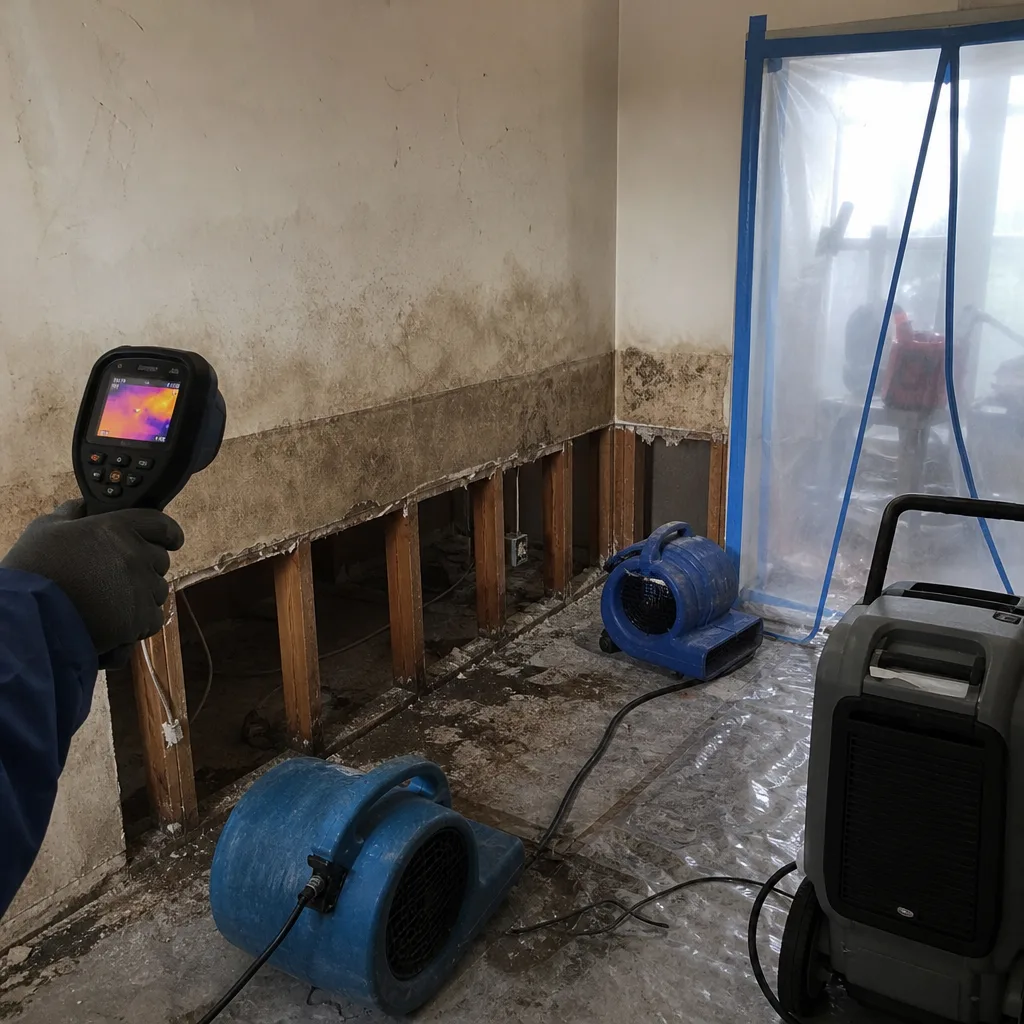 Before
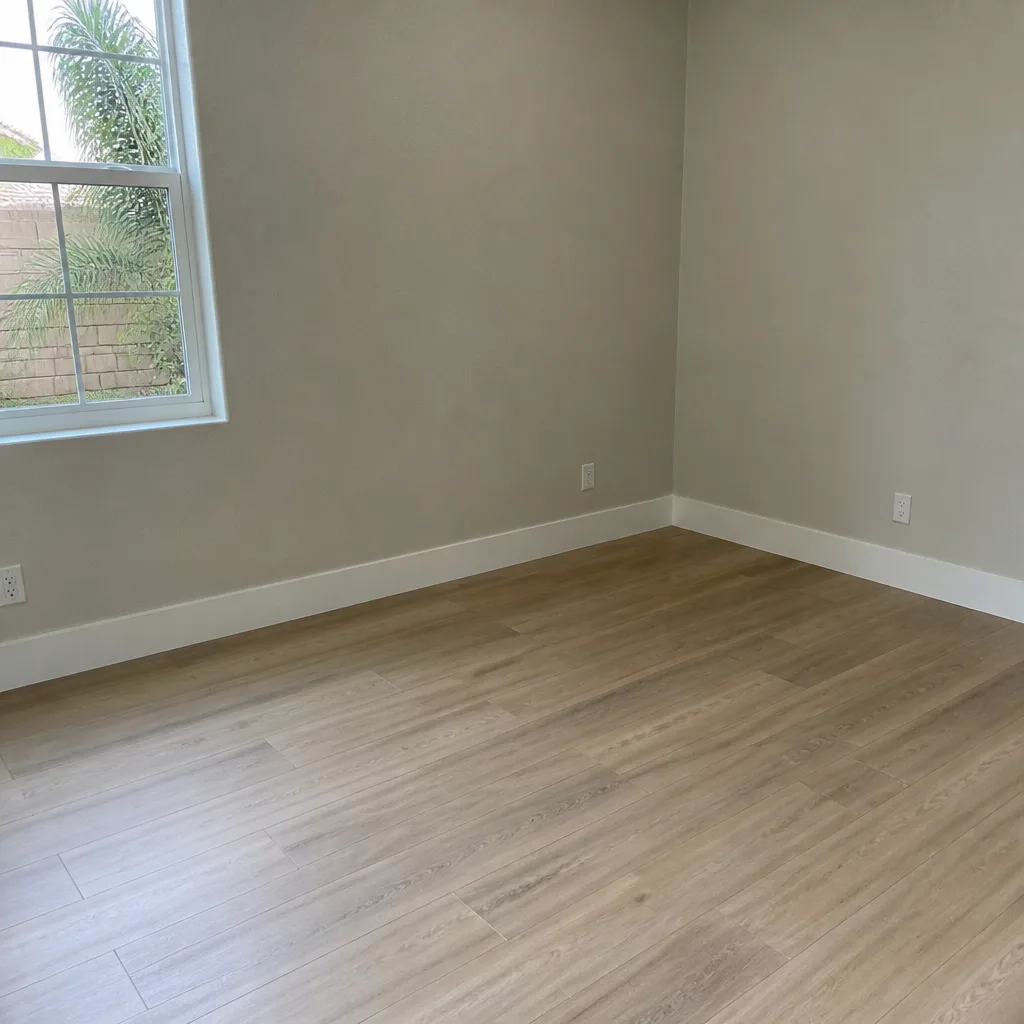 After
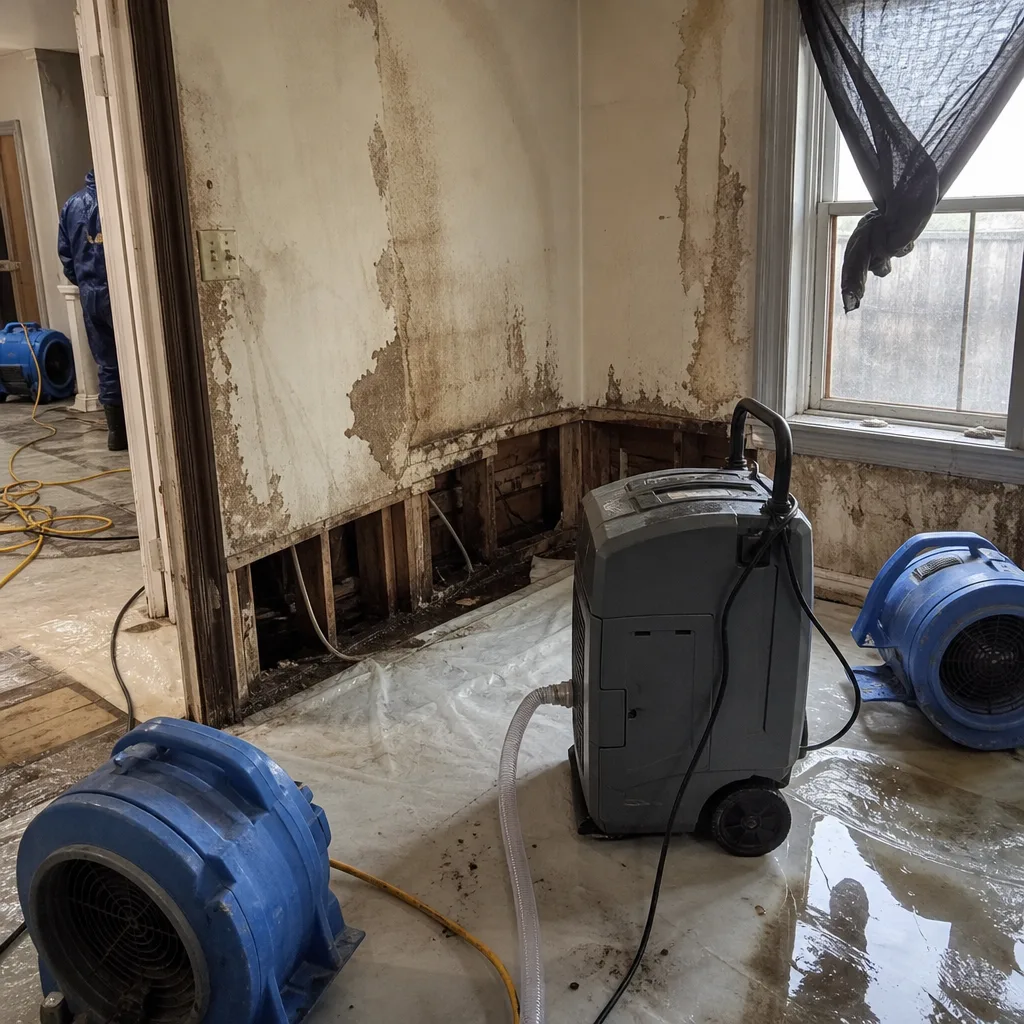 Before
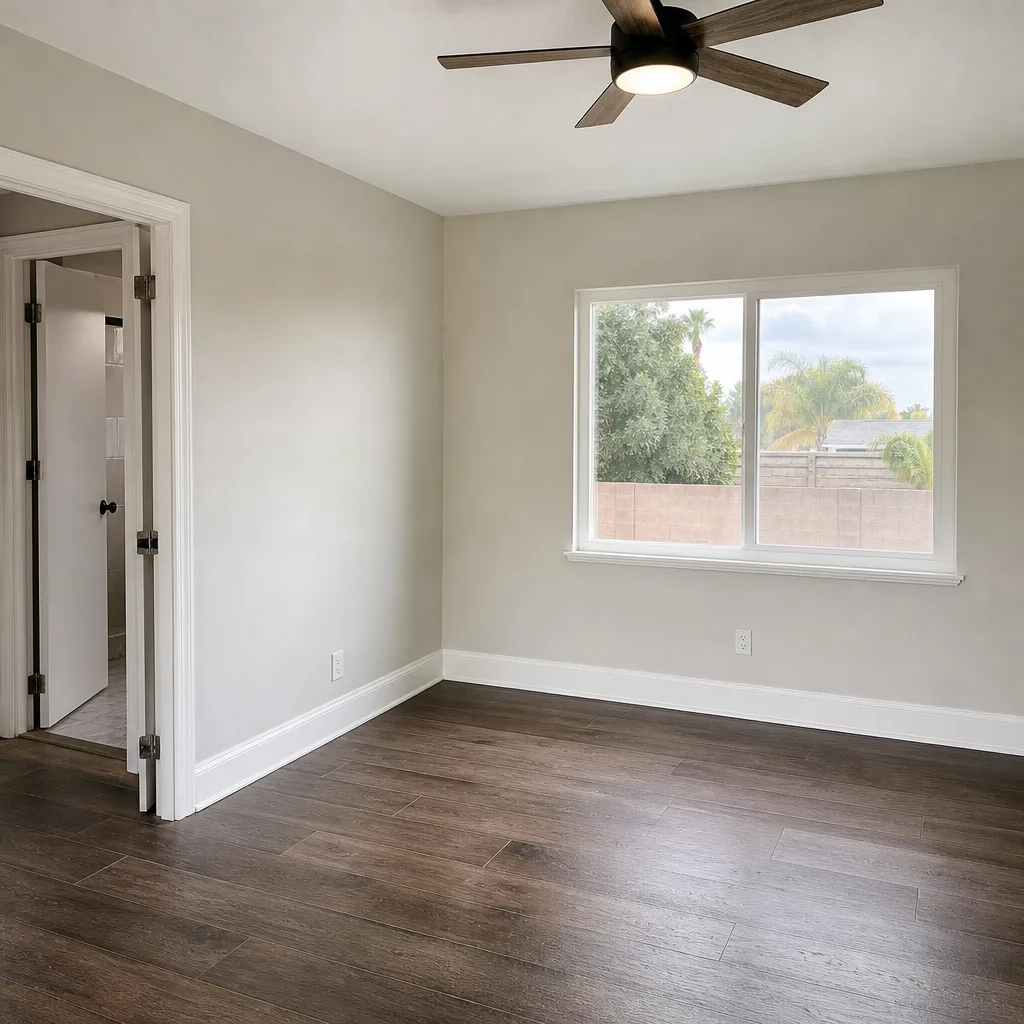 After
 Before
 After